
Blog · Design
Streamlining Solar Design & Engineering with Automation Software
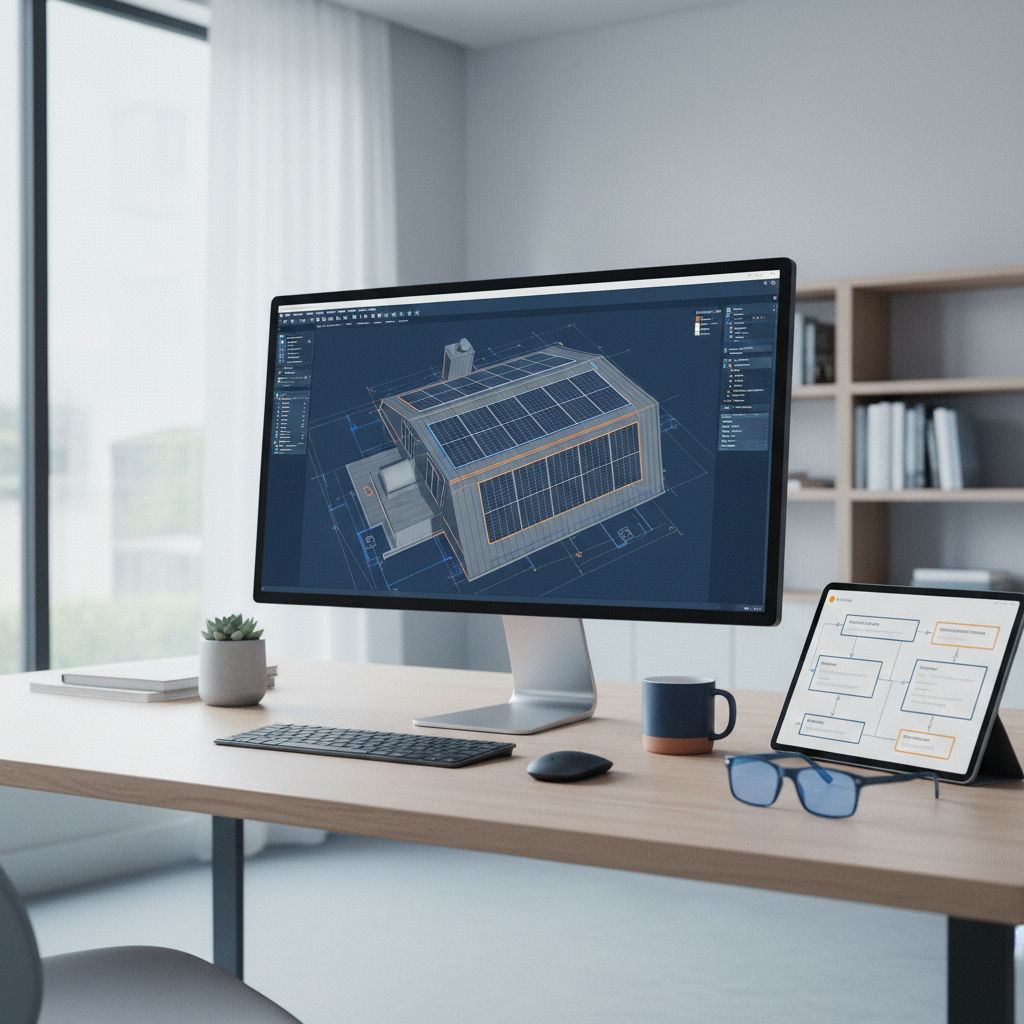
Manual solar design and engineering processes create bottlenecks. They consume significant time. They introduce errors. These issues slow down your project pipeline. They impact your bottom line. Automation software provides a direct solution. It cuts design time. It minimizes errors. It accelerates project delivery.
The Problem with Manual Solar Design
Solar project development hinges on accurate and efficient design. Traditional methods rely on manual data entry. They use disconnected software tools. This approach leads to several common problems.
Time-Consuming Processes
Each project requires detailed site assessment. It needs irradiance calculations. It demands panel layout. It involves electrical stringing. Manual execution of these steps takes hours. Revisions add more time. A simple change order can require complete redesign. This delays project starts. It ties up skilled personnel.
Prone to Human Error
Manual calculations are susceptible to mistakes. Incorrect array sizing occurs. Inaccurate energy yield estimates happen. Misplaced conduit runs arise. These errors lead to significant rework. They cause costly material waste. They threaten project profitability. They also extend installation timelines. Your customers wait longer.
Lack of Consistency and Standardization
Different designers use varied approaches. This creates inconsistent outputs. It complicates quality control and makes training new staff difficult. Without standardization, designs vary in quality. Your proposals lack uniformity. Your operational efficiency suffers. Maximizing Solar Business Efficiency: The Power of Workflow Automation addresses how consistent workflows improve overall business efficiency.
The Impact on Your Solar Business
The inefficiencies in manual design cascade through your entire operation. They affect sales, impact project management, and strain customer relationships.
Delayed Project Starts and Sales Cycles
Slow design turnaround means slower proposals. Your sales team cannot close deals quickly. Prospects move to competitors. Project delays cost you revenue. They limit your annual installation capacity. Your pipeline moves at a reduced pace. Automating Solar Lead Generation & Qualification for Sales Teams highlights how faster proposals convert more leads.
Increased Costs and Reduced Profit Margins
Errors in design lead to change orders. They result in material re-orders. They require additional labor hours. Each change order costs time and money. These costs erode your profit margins. They reduce the financial viability of projects. You miss savings targets.
Strain on Engineering Resources
Your expert engineers spend time on repetitive tasks. They fix avoidable errors. This diverts them from complex problem-solving. It reduces innovation capacity. It increases staff burnout. Your most valuable assets are underutilized.
Solentrex: Automated Solar Design and Engineering
Solentrex provides a comprehensive platform. It automates critical design and engineering functions. It streamlines your workflow. It guarantees precision. It delivers faster proposals.
Step 1: Rapid Site Assessment and Data Integration
Upload site data. Our platform integrates high-resolution imagery and uses LiDAR data. It incorporates accurate meteorological information. The system analyzes roof planes. It identifies shading obstructions. It calculates optimal panel placement. This takes minutes. Manual methods take hours.
Step 2: Automated Solar Design Layout and Electrical Stringing
The platform generates an optimized panel layout. It considers all site constraints. It adheres to local codes. It configures electrical stringing automatically. It balances string lengths. It minimizes voltage drop. This process takes seconds. Engineers review outputs. They make minor adjustments. This is not CAD for solar automation in the traditional sense. It is a smarter, faster system.
Step 3: Instantaneous Bill of Materials (BOM) and Performance Modeling
The system generates a precise Bill of Materials. It accounts for every component. It creates detailed single-line diagrams. It produces accurate energy production estimates. It calculates financial projections. Your proposals are complete and accurate. You deliver faster solar proposals. Your sales team closes more deals.
How Solentrex Ensures Accuracy and Reduces Errors
Our platform implements a hard gate system. This prevents flawed designs from progressing. It identifies critical errors early. It ensures every design meets strict parameters. This eliminates costly rework later.
Built-in Constraint Checking
The system applies hundreds of rules. It checks for setbacks. It verifies panel clearances. It confirms code compliance. It flags any violations instantly. This prevents non-compliant designs.
Dynamic Shading Analysis
Our per-panel modeling accounts for micro-shading. It provides precise energy yield predictions. It optimizes inverter selection. This level of detail is impossible with manual methods. It reduces design errors solar engineers face daily.
Automated Electrical Validation
The platform verifies all electrical connections. It checks string voltages. It confirms current limits. It ensures system operability. It prevents wiring mistakes. This reduces installation issues.
Advantages Over Legacy Tools
Legacy solar engineering software often requires extensive manual input. They offer limited automation. They do not integrate data seamlessly. Solentrex delivers a unified, automated experience.
Speed and Efficiency
Our system creates complex designs in about 3 minutes. Legacy tools take hours. This accelerates your entire sales process. It boosts your project pipeline velocity. You produce accurate designs 20x faster.
Data Integration and Consistency
Solentrex integrates all relevant data points. It ensures consistency across designs. There is no need for data transfer between multiple applications. All information resides in one platform. This reduces data entry errors.
The Hard Gate: Preventing Costly Mistakes
Traditional CAD for solar automation tools allow flawed designs to advance. They rely on manual checks. Our hard gate stops bad designs. It forces correction. This saves your company money. It protects your reputation.
Tips for Maximizing Automation Benefits
To fully leverage automated solar design, integrate it into your operational workflow. Train your team. Embrace the platform's capabilities.
Standardize Your Input Data
Ensure all site assessment data is consistent. Use high-quality imagery. Verify address details. Clean data inputs lead to accurate outputs. This is crucial for reducing design errors solar projects encounter.
Integrate with Your Sales Process
Connect design automation to your sales CRM. Generate proposals quickly. Provide instant feedback to your sales team. This shortens the sales cycle. Accelerating Solar Project Management Through Automated Task Allocation illustrates how integrated systems improve project hand-offs.
Regular Review and Feedback Loops
Even with automation, review is essential. Your engineers validate outputs. They provide feedback. This refines system accuracy. It ensures continuous improvement.
Common Mistakes to Avoid
Automation is powerful. Misuse can still lead to problems. Avoid these pitfalls.
Over-Reliance Without Verification
Do not assume perfect output every time. Review the automated designs. Understand the underlying logic. Automation assists; it does not replace human oversight. This helps prevent unforeseen design errors solar installations might face.
Ignoring Training
Invest in team training. Ensure all users understand the platform's features. Proper training maximizes adoption. It unlocks the full potential of the software.
Neglecting Local Codes and Regulations
Ensure the system parameters reflect local requirements. Keep up with codes. The platform must incorporate these. This ensures compliant designs. The Benefits of Automated Compliance Checks for Solar Installations explains why this is critical.
Future-Proofing Your Solar Business
Automated solar design is not a luxury. It is a necessity. It prepares your company for growth. It increases your competitive edge. It ensures long-term profitability. Your business must adapt. Embrace intelligent automation. It secures your future. It delivers consistent, high-quality results. It guarantees customer savings.
Conclusion
Manual design processes hinder solar business growth. They introduce errors. They slow down project delivery. Solentrex offers a solution. Its automated solar design and engineering platform streamlines operations. It reduces design errors. It accelerates proposal generation. You gain efficiency. You boost profitability. You deliver superior projects. Implement Solentrex. Transform your design process. Grow your business.
Ready to Optimize Your Solar Operations?
Contact Solentrex today. Learn how automated design can elevate your business. Unlock greater efficiency. Maximize your project pipeline. Deliver more successful solar installations. Start building smarter, faster, and more profitably. Your success is our mission.
Frequently asked questions
How does automated solar design reduce errors?
The Solentrex platform uses a hard gate system to prevent flawed designs from advancing. It incorporates built-in constraint checking, dynamic per-panel shading analysis, and automated electrical validation to catch and correct errors before they become costly.
How much faster are proposals with automated design?
Solentrex generates complex solar designs and complete proposals in about 3 minutes, significantly faster than traditional methods which can take hours. This accelerates the entire sales cycle and improves proposal delivery speed.
What kind of data does the automation software use for design?
The platform integrates high-resolution imagery, LiDAR data, and meteorological information. It analyzes roof planes, identifies obstructions, and calculates optimal panel placement and electrical stringing based on this comprehensive data.
Is Solentrex suitable for complex commercial solar projects?
Yes, Solentrex is designed to handle the complexities of various solar projects, from residential to commercial, by providing per-panel modeling and integrating a wide array of site and regulatory data to ensure accurate and optimized designs for diverse applications.
How does automated design help with profitability?
By reducing design errors, preventing change orders, and accelerating the sales and project delivery cycles, automated design significantly lowers operational costs and increases the volume of projects completed. This directly boosts profit margins and overall business profitability.