
Blog · Industry
Accelerating Solar Project Management Through Automated Task Allocation
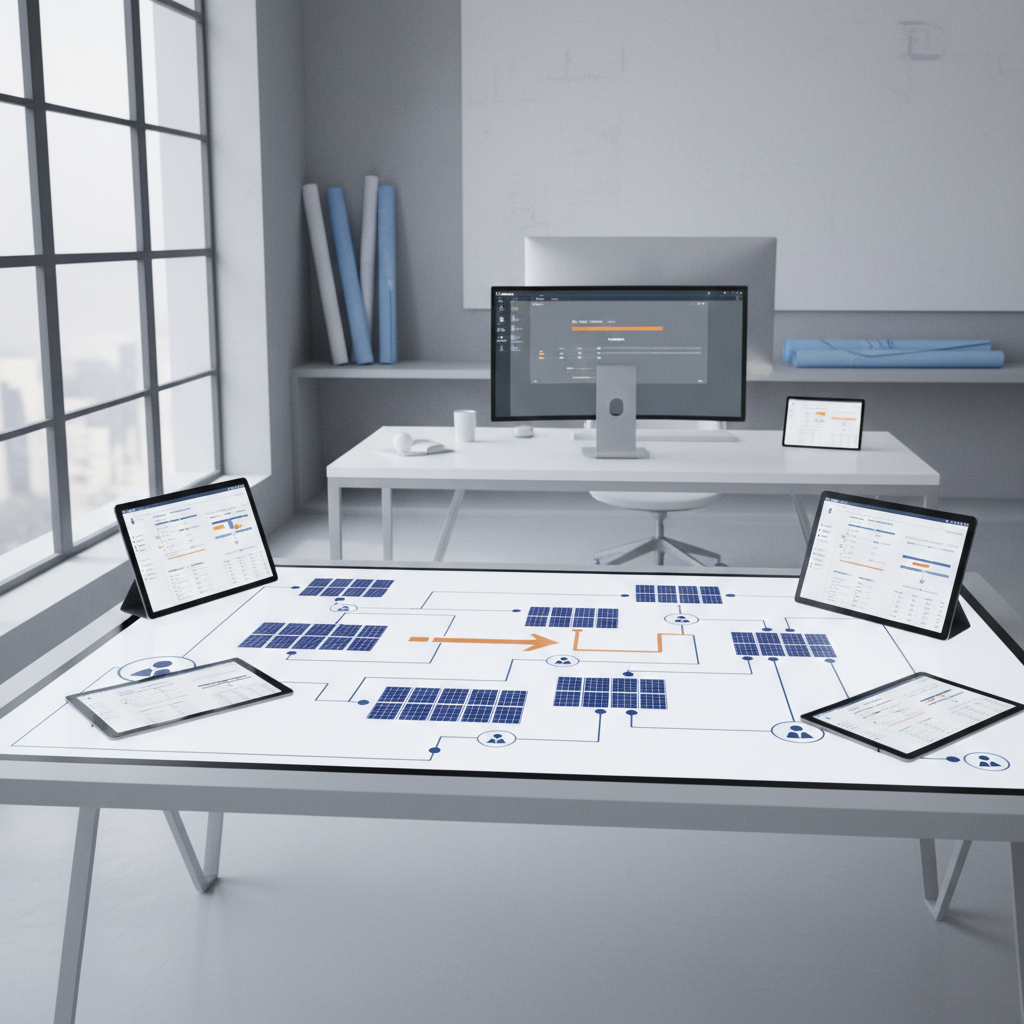
The Bottleneck Problem: Manual Solar Project Management
Solar project management involves many moving parts. From sales and design to permitting and installation, each step demands precision and coordination. Manual processes often create bottlenecks. Tasks are assigned haphazardly. Communication breaks down. Deadlines slip. This leads to frustrated customers and lost profits.
Your teams spend valuable time chasing updates. You see change orders pile up. Crucial information gets buried in emails. This is not efficient. It prevents your business from scaling. The solution lies in Maximizing Solar Business Efficiency: The Power of Workflow Automation.
Automated Task Allocation: The Engine of Efficiency
Automated task allocation in solar project management assigns tasks based on rules and real-time data. It ensures the right person gets the right task at the right time. This removes guesswork. It eliminates manual assignment errors. Your team focuses on execution, not administration.
Defining Roles and Responsibilities in Solar Workflow Optimization
Effective automation starts with clear definitions. You need to map out every role in your project. Each role has specific responsibilities. The system uses these definitions for automated assignment. For example, a "Permitting Specialist" automatically receives permit submission tasks. An "Installer" receives installation scheduling tasks. This ensures accountability.
Setting Up Automated Triggers for Solar Project Scheduling
Automated triggers are the core of workflow optimization solar. A trigger is an event that initiates a task or a series of tasks. For instance, once a solar design is approved, a trigger can automatically create tasks for material procurement and permitting application. When the permit is issued, another trigger schedules the installation. This keeps your projects moving forward without human intervention at every step.
Example Automated Triggers:
Design Approval: Triggers material ordering, permitting application, and installation scheduling tasks.
Permit Issued: Triggers final site survey scheduling and installation team assignment.
Installation Complete: Triggers inspection request and system activation tasks.
Payment Received: Triggers warranty registration and customer follow-up.
Integrating With Other Solar Business Systems
Your automated project management solar system should not exist in a vacuum. It must integrate with your other business tools. This includes CRM for customer data, design software for project specifications, and financial systems for invoicing. Data flows seamlessly between platforms. This eliminates duplicate data entry. It reduces errors. It provides a single source of truth for every project.
Optimizing Resource Allocation Solar
Resource allocation is critical. Manual methods often lead to over- or under-utilization of your team. Automated systems provide visibility. They track team availability, skill sets, and current workload. This allows for intelligent resource distribution.
Matching Skills to Tasks
An automated system can match task requirements with team member skills. A complex electrical wiring task goes to a master electrician. A routine panel cleaning task goes to a junior technician. This ensures quality work. It prevents delays caused by assigning tasks to unqualified personnel. It reduces rework.
Balancing Workloads to Prevent Burnout
Overloaded teams lead to mistakes and burnout. Underloaded teams are inefficient. Automated resource allocation monitors individual and team workloads. It flags potential imbalances. The system can suggest reassigning tasks or adjusting schedules. This keeps your team productive and engaged. It ensures even distribution of work.
Real-time Visibility and Reporting
Automated systems offer real-time dashboards. You see the status of every project. You track individual task progress. This visibility helps you identify bottlenecks instantly. You can make proactive decisions. Reports provide insights into team performance, project timelines, and cost adherence. This data is crucial for continuous improvement.
Implementing Automated Solar Task Management: A Step-by-Step Guide
Implementing automation requires planning. Follow these steps to ensure a smooth transition.
Step 1: Audit Your Current Processes
Before automating, understand your existing workflows. Document every step. Identify where manual effort is highest. Pinpoint common errors. This audit reveals the areas that will benefit most from automation. It provides a baseline for measuring improvement.
Step 2: Define Your Automation Goals
What do you want to achieve? Reduce project completion time? Lower administrative costs? Improve customer satisfaction? Clear goals guide your automation strategy. They help you select the right tools. They define success metrics.
Step 3: Choose the Right Automation Platform
Select a platform built for solar. It should offer robust task management, project scheduling, and resource allocation features. It must integrate with your existing software. Prioritize platforms that provide a hard gate. This feature stops a flawed deal from advancing. It ensures data integrity and compliance before any commitment. This prevents costly errors down the line.
Step 4: Configure Workflows and Rules
Set up your automated triggers. Define task dependencies. Establish roles and permissions. This is where you translate your optimized processes into the system. Start with simple workflows, then expand. Test each workflow thoroughly.
Step 5: Train Your Team
Your team needs to understand the new system. Provide comprehensive training. Explain the benefits of automation. Address concerns. Ensure everyone knows how to use the tools effectively. Ongoing support is vital.
Overcoming Challenges in Automated Project Management Solar
No implementation is without hurdles. Anticipate these common challenges.
Data Migration and Integration Complexities
Moving data from old systems can be complex. Ensure data cleanliness before migration. Plan for thorough testing after integration. Work closely with your software provider. Streamlining Solar Design & Engineering with Automation Software often presents specific integration needs that must be addressed upfront.
Resistance to Change
Some team members may resist new systems. Communicate the "why" behind the change. Highlight how automation simplifies their work. Involve key team members in the planning phase. Show them how the system prevents issues like those discussed in The Benefits of Automated Compliance Checks for Solar Installations.
Maintaining System Accuracy and Updates
Automated systems require regular maintenance. Update workflows as your business processes evolve. Ensure all data is current. Periodically review system performance. This ensures continued efficiency.
The Solentrex Difference: Hard Gates and Seamless Workflows
Solentrex provides comprehensive Maximizing Solar Business Efficiency: The Power of Workflow Automation solutions. Our platform streamlines every aspect of your operations. We offer automated project management, task allocation, and scheduling. Our system integrates with your existing tools. It provides real-time visibility.
Our unique hard gate feature prevents errors. It blocks any deal with missing or incorrect information. This ensures compliance. It protects your profits. It guarantees customer satisfaction. Our tools reduce administrative overhead. They accelerate project timelines. They free your team to focus on growth, not paperwork.
From initial lead to system activation, Solentrex ensures a smooth, error-free process. Our solutions help solar companies achieve peak efficiency. We reduce per-project costs. We improve your close rates. We deliver predictable results, every time.
Conclusion
Automated project management and task allocation are essential for modern solar businesses. They eliminate bottlenecks, improve coordination, and ensure timely project completion. By embracing automation, you streamline your operations. You empower your team. You deliver better results to your customers. Invest in automated solutions to drive your solar business forward.
Ready to Optimize Your Solar Operations?
Discover how Solentrex can transform your project management. Visit our website for a demo. See how our automated solutions can reduce your costs and accelerate your growth. Your next successful project starts here.
Frequently asked questions
What is automated task allocation in solar project management?
Automated task allocation assigns project tasks to team members based on predefined rules, roles, skills, and real-time availability. It removes manual guesswork and ensures that the right person receives the right task at the right time, streamlining workflow and preventing delays.
How does automated task allocation improve project scheduling in solar?
Automated task allocation utilizes triggers to initiate follow-up tasks upon the completion of a previous step or milestone. For example, once a design is approved, tasks for permitting and material ordering are automatically generated and scheduled, ensuring a continuous and efficient project flow without manual intervention.
What is a hard gate feature in solar project management software?
A hard gate is a critical feature in project management software that prevents a project or deal from advancing to the next stage if specific criteria are not met or if data is incomplete/incorrect. This ensures compliance, prevents costly errors, and maintains data integrity throughout the project lifecycle.
How can I ensure my team adopts a new automated project management system?
Successful adoption requires comprehensive training, clear communication of the system's benefits, and involving key team members in the planning phase. Address concerns proactively and demonstrate how automation simplifies their work and reduces common frustrations caused by manual processes.
What are the key benefits of optimizing resource allocation with automation?
Optimized resource allocation matches tasks with appropriate skill sets, balances team workloads to prevent burnout, and provides real-time visibility into project status and team capacity. This leads to higher quality work, improved efficiency, and better project outcomes.