
Blog · Industry
Market Forecast: Residential vs. Commercial Solar Growth in 2026
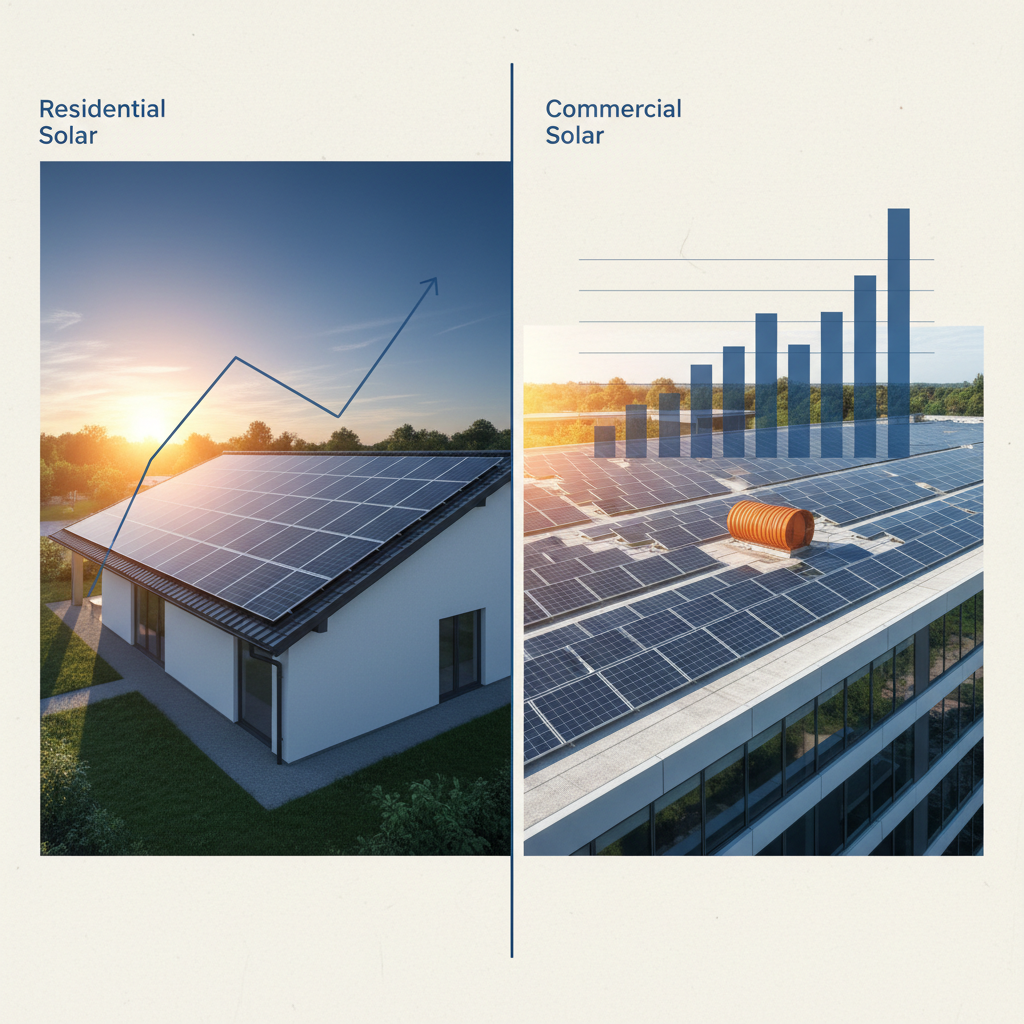
The solar industry shifts rapidly. Your ability to anticipate these changes drives your success. This analysis forecasts the trajectory of both residential and commercial solar markets into Q4 2026. We provide actionable insights for allocating resources and identifying profitable segments. Understanding these market dynamics ensures your business remains competitive and poised for growth.
Solar energy's expansion continues its upward trend. However, the growth rates and underlying drivers vary significantly across market segments. Residential solar, commercial solar, and utility-scale solar each present unique opportunities and challenges. Strategic planning requires a deep dive into each segment's forecast.
Residential Solar Market 2026: Trends and Projections
The residential solar market will continue its robust expansion through Q4 2026. Homeowner demand for energy independence and lower utility bills remains strong. Policy incentives and evolving financing options fuel this demand. Your sales teams must understand these drivers to effectively position your offerings.
Key Drivers for Residential Growth
Policy Support and Incentives
Federal incentives, primarily the Investment Tax Credit (ITC), remain a significant factor. State-level programs, such as net metering policies and direct rebates, also play a crucial role. These policies reduce the upfront cost burden for homeowners. They make solar more accessible and attractive. Navigating Federal & State Solar Incentives in Late 2026 outlines the specifics of these programs.
Declining System Costs
Technology advancements and economies of scale continue to drive down the cost of residential solar installations. This makes solar a more financially viable option for a broader range of homeowners. Reduced hardware costs directly translate to better customer savings and quicker payback periods.
Increased Consumer Awareness and Demand
Homeowners are increasingly aware of solar's environmental benefits and long-term financial advantages. Marketing efforts that highlight these aspects resonate strongly. Your reps should focus on educating potential customers about the immediate and future value proposition of solar energy.
Challenges in the Residential Sector
Grid Modernization and Interconnection Delays
As more residential systems come online, grid infrastructure faces increased strain. Interconnection processes can become complex and lengthy, leading to installation delays. Your operations must account for these potential bottlenecks in project timelines.
Evolving Net Metering Policies
Some states are revising net metering policies, which can impact the financial attractiveness of residential solar. Your finance partners need to model these changes accurately. This ensures your proposals maintain their value proposition.
Workforce Shortages
The rapid growth of residential solar demands a larger skilled workforce. Finding and retaining qualified installers and electricians remains a challenge. Addressing these workforce development issues is critical for scaling your operations. Workforce Development & Talent Acquisition Challenges in a Growing Solar Sector discusses strategies to mitigate this.
Commercial Solar Growth: Outlook for Q4 2026
The commercial solar growth segment is poised for significant acceleration. Businesses seek operational cost reductions and enhanced sustainability profiles. This market includes small and medium-sized enterprises (SMEs), industrial facilities, and public sector buildings. Your focus here should be on long-term value and energy resilience.
Catalysts for Commercial Expansion
Energy Cost Savings
Businesses face rising electricity costs. Commercial solar installations offer predictable energy expenses over decades. This financial certainty is a powerful incentive. Present clear ROI calculations to your commercial clients.
Corporate Sustainability Goals
Many companies have ambitious environmental, social, and governance (ESG) targets. Adopting solar demonstrates a commitment to sustainability. This improves brand image and meets stakeholder expectations. Your sales approach should emphasize these non-financial benefits.
Resilience and Grid Independence
Battery storage integration with commercial solar systems provides energy resilience. This protects businesses from outages and price volatility. Emerging Technologies to Watch: Solar+Storage & Grid Integration in Q4 highlights the importance of these combined solutions. This is a critical selling point for businesses that cannot afford downtime.
Hurdles in the Commercial Market
Longer Sales Cycles and Complex Financing
Commercial projects typically involve longer decision-making processes and more complex financing structures. Your sales teams need tailored strategies for these extended cycles. Patience and detailed proposals are essential.
Permitting and Interconnection Complexity
Permitting for commercial projects can be more intricate than residential. Interconnection requirements often involve higher voltage systems and closer coordination with utilities. Expect more rigorous scrutiny and planning.
Upfront Capital Investment
Despite long-term savings, the initial capital outlay for commercial solar can be substantial. Offering diverse financing options, such as Power Purchase Agreements (PPAs) or leases, can overcome this barrier. Help your clients navigate the financial landscape.
Utility-Scale Solar Outlook: A Broader Perspective
While this article focuses on distributed generation, understanding the utility-scale solar outlook provides critical context for the entire industry. Large-scale projects continue to dominate new electricity generation capacity. Their growth drives down component costs across the board. This benefits both residential and commercial sectors. This broader market dynamic is a key component of The Solar Industry Outlook for Q4 2026: Trends & Strategic Opportunities.
Strategic Implications for Your Business
Your strategy must adapt to these shifting market dynamics. Do not chase every lead in every segment. Focus your efforts where your business model finds the most traction. Your reps need tools that enable precision.
For residential projects, streamline your design and proposal process. Our platform designs accurate systems in three steps, in about three minutes. It offers per-panel modeling. This gives your reps the tools to close deals faster. It also hard gates any flawed proposals, preventing errors before they reach a customer. This protects your margins and your reputation.
For commercial opportunities, focus on robust financial modeling and detailed energy solutions. The platform allows for comprehensive system design and ensures that every detail, from consumption patterns to local regulations, is factored in. This allows you to present a confident, accurate proposal every time.
Both segments require accurate, real-time data. You need precise interval data to validate savings. Your software must pull accurate utility rates automatically. This reduces manual input errors and eliminates change orders. Your pipeline depends on this accuracy.
Conclusion: Positioning for Success in Q4 2026
The solar market in Q4 2026 offers significant growth for both residential and commercial sectors. Residential will be driven by homeowner demand and supportive policies. Commercial will accelerate due to business cost savings and sustainability goals. Understanding these nuances is not optional. It is essential. Your business must leverage tools that provide accuracy and efficiency. This allows you to capitalize on market opportunities while avoiding costly errors.
Align your resources with these forecasts. Equip your sales and operations teams with precise tools. Block flawed deals with a hard gate. Your profitability depends on it.
Take Action: Optimize Your Solar Operations
Are you ready to streamline your solar sales and installation process? See how Solentrex can empower your teams to design, finance, and sell solar and battery storage systems more efficiently. Request a demo today. Discover the precision that drives profit.
Frequently asked questions
What are the primary drivers for residential solar growth in 2026?
Residential solar growth in 2026 is primarily driven by federal and state incentives (like the ITC), declining system costs due to technological advancements, and increasing consumer awareness of solar's financial and environmental benefits.
What key factors are accelerating commercial solar growth in 2026?
Commercial solar growth is accelerating due to businesses seeking significant energy cost savings, meeting corporate sustainability goals (ESG), and enhancing energy resilience through combined solar and battery storage solutions.
What are the main challenges for the residential solar sector leading into Q4 2026?
Key challenges for the residential sector include potential grid modernization and interconnection delays, evolving net metering policies that can impact financial viability, and ongoing workforce shortages for skilled installers.
How does utility-scale solar growth impact residential and commercial markets?
Utility-scale solar growth significantly impacts residential and commercial markets by driving down the overall cost of solar components and technology through economies of scale, making solar more affordable across all segments.