
Blog · Design
How Integrated Solar Design Software Blocks Flawed Deals and Boosts Profitability
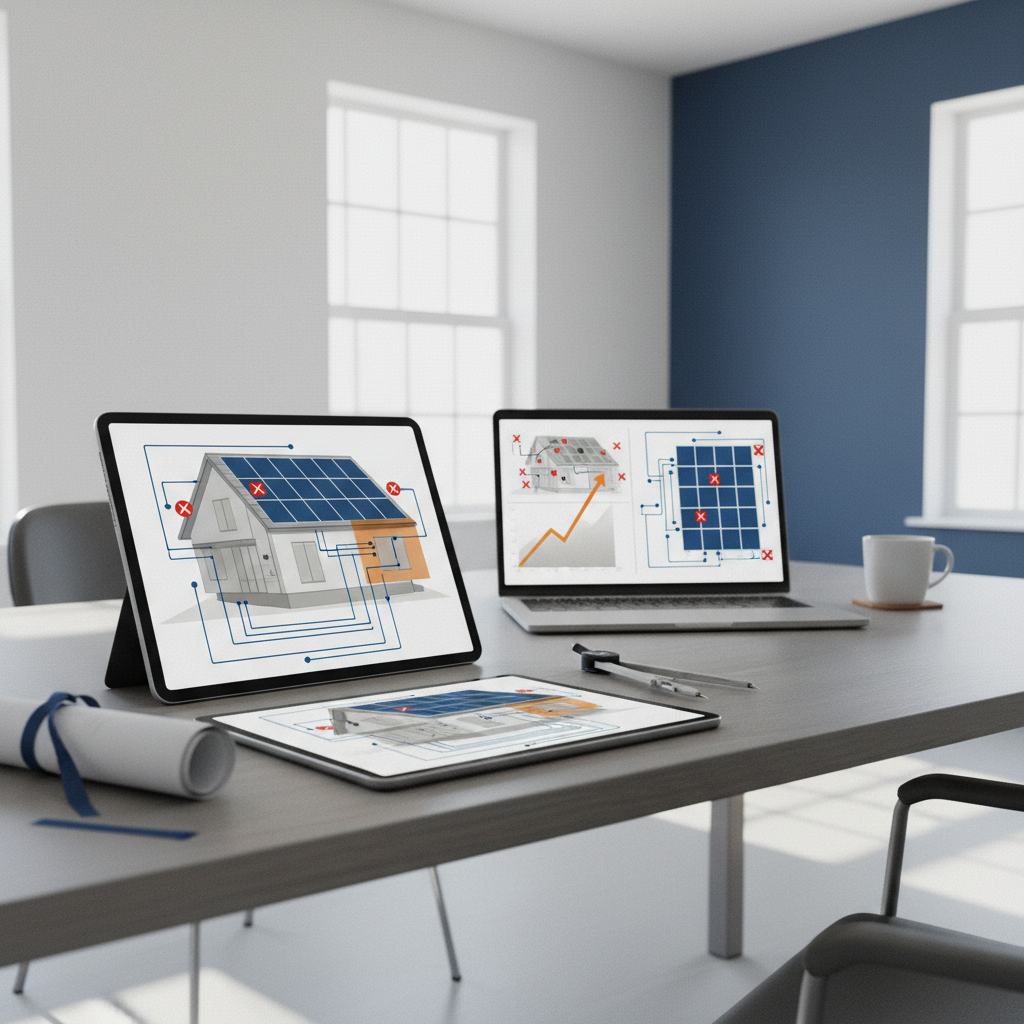
In the competitive solar energy landscape, the difference between a thriving business and one plagued by perpetual costly errors often lies in the precision of its initial project designs. Inaccurate solar designs are not merely minor inconveniences; they are a critical bottleneck that leads to expensive change orders, project delays, diminished customer trust, and ultimately, eroded profitability. For solar companies, including finance partners, EPCs, and sales teams, traditional, fragmented design processes often introduce vulnerabilities that result in flawed deals.
But what if you could virtually eliminate these costly errors at the design phase? What if every proposal you presented was not just an estimate, but a guarantee of accuracy, designed to maximize efficiency and customer savings from the outset? This is where integrated solar design software becomes indispensable – transforming your operational workflow and bolstering your bottom line.
The Pervasive Problem of Faulty Solar Designs
The consequences of faulty solar designs reverberate throughout the entire solar project lifecycle. These errors typically manifest in several critical areas:
Impact on Project Costs: The Hidden Drain
Change Orders: Perhaps the most immediate and tangible impact of solar sales design errors is the proliferation of change orders. When initial designs fail to account for site-specific conditions, accurate shade analysis, or precise system sizing, installers inevitably encounter discrepancies on-site. Correcting these issues post-contract signing involves additional labor, material costs, and often, permits, directly cutting into project margins.
Rework and Delays: Beyond direct costs, faulty designs necessitate rework, which extends project timelines. Delays can lead to penalties, impact cash flow, and tie up valuable installation crews, preventing them from moving on to new projects. This inefficiency is a silent killer of profitability.
Eroding Customer Trust and Referrals
When a customer is presented with a fantastic proposal, only to learn later that the system needs resizing, or the installation timeline will be pushed back due to design flaws, their confidence in your company rapidly diminishes. Dissatisfied customers are less likely to provide positive reviews or referrals, which are vital for sustained business growth in Goodyear, AZ, and beyond. In an industry built on trust and promises of long-term savings, a reputation for inaccuracy can be devastating.
Missed Sales Opportunities
Beyond direct financial and reputational damage, the inability to consistently produce accurate solar proposals can lead to missed sales. If your sales team is encumbered by a lengthy, manual design process that frequently requires revisions, they are less agile in responding to customer inquiries and closing deals. Prospects might move on to competitors who can offer faster, more reliable proposals.
How Integrated Solar Design Software Elevates Accuracy and Efficiency
Integrated solar design software offers a holistic solution to these pervasive problems by unifying critical steps from initial contact to final installation. This technological advancement allows solar companies to prevent faulty solar designs and ensure accurate solar proposals, thereby boosting overall profitability.
Step 1: Precision Site Assessment and Data Integration
Leveraging High-Resolution Imagery: Modern How Integrated Solar Design Software Blocks Flawed Deals and Boosts Profitability platforms integrate with high-resolution satellite imagery and LiDAR data, providing an incredibly detailed view of a property without requiring an immediate, costly site visit. This allows for precise measurements, identification of obstructions, and accurate roof pitch analysis.
Advanced Shade Analysis: One of the most common solar sales design errors stems from inadequate shade analysis. Integrated software employs sophisticated algorithms to model shade patterns throughout the year, factoring in surrounding trees, buildings, and other obstructions. This ensures that panel placement maximizes solar irradiance and accurately projects energy production.
Direct Data Input: Sales teams can input customer energy consumption data directly into the design platform, allowing the software to recommend optimal system sizing based on actual usage, rather than generic estimates.
Step 2: Automated Design and System Optimization
Automated Layout Generation: With just a few clicks, the software can automatically generate multiple optimal panel layouts based on roof dimensions, shading, and local building codes. This significantly reduces the time spent on manual design and minimizes human error.
Code Compliance and Interconnection Rules: Integrated platforms often have built-in databases of local electrical codes, permitting requirements, and utility interconnection rules. This ensures that designs are compliant from the outset, reducing the likelihood of costly revisions during the permitting process – a common hurdle for solar companies in areas like Goodyear, AZ.
Battery Storage Integration: For those looking to incorporate battery storage, the software can simulate various battery configurations and their impact on energy resilience and savings. This integrated approach is crucial for designing comprehensive, future-proof solar and battery storage solutions.
Step 3: Streamlined Proposal Generation and Finance Integration
One-Click Proposal Creation: Once a design is finalized, the software can automatically generate professional, branded proposals that include detailed system specifications, projected energy production, financial analysis, and environmental benefits. This dramatically speeds up the sales cycle.
Accurate Financial Modeling: Integrated platforms seamlessly connect design data with financial calculators. This means that the projected savings, ROI, and loan repayment schedules in your proposals are directly tied to the precise energy production estimates from the design. This accuracy builds trust and helps customers understand the true value proposition.
Facilitating Lender Connections: By providing accurate and comprehensive proposals, integrated design software also Optimizing Solar Financing: Connecting Lenders and Customers Seamlessly for Faster Approvals. Lenders can quickly assess the viability and risk of a project when presented with precise financial and technical specifications, leading to faster approvals and a smoother customer experience.
Error Resolution and Validation: Before a proposal is sent, the software can highlight potential design flaws or inconsistencies, prompting immediate correction. This proactive error prevention is a significant Reducing Solar Change Orders by 50%+: The Impact of an All-in-One Platform.
Key Benefits of Adopting Integrated Solar Design Software
- Reduced Operational Costs: By minimizing change orders and rework, companies drastically cut down on unexpected expenses and wasted resources.
- Improved Sales Efficiency: Sales teams can generate accurate, compelling proposals faster, freeing them to pursue more leads and close more deals.
- Enhanced Customer Satisfaction: Precise designs lead to flawless installations, fulfilling customer expectations and driving positive referrals.
- Increased Profitability: The cumulative effect of cost reduction, increased sales velocity, and reduced rework directly translates into higher profit margins.
- Guaranteed Customer Savings: With accurate production estimates, you can confidently How to Guarantee Customer Savings in Solar Deals: A Platform Approach to Value Proposition, strengthening your value proposition.
Common Mistakes to Avoid When Implementing Solar Design Software
Solentrex Inc: Your Partner in Flawless Solar Design and Sales
At Solentrex Inc, we understand the challenges solar companies face in Goodyear, AZ, and across the nation. Our platform is specifically designed to provide a comprehensive, integrated solution for solar and battery storage systems, enabling you to design, finance, and sell with unparalleled efficiency. By leveraging our robust solar design software capabilities, you can eliminate design errors, accelerate your sales cycle, and guarantee customer satisfaction.
Don't let faulty designs erode your profits and reputation. Embrace the power of integrated solar design to build a more efficient, profitable, and customer-centric solar business.
Ready to transform your solar sales process and ensure every deal is a flawless success? [Contact Solentrex Inc today to schedule a demo and discover how our integrated solar design and sales platform can revolutionize your operations.]
Frequently asked questions
What are the main consequences of faulty solar designs?
Faulty solar designs lead to increased project costs due to change orders and rework, delays in project completion, erosion of customer trust and referrals, and missed sales opportunities due to inefficient proposal generation.
How does integrated solar design software prevent errors?
It leverages high-resolution imagery and LiDAR data for precise site assessment, performs advanced shade analysis, automates layout generation adhering to local codes, and integrates seamlessly with financial modeling to ensure accurate proposals from the outset.
What are the key benefits of using integrated solar design software?
Key benefits include reduced operational costs, improved sales efficiency, enhanced customer satisfaction, increased profitability, and the ability to confidently guarantee customer savings.
What common mistakes should be avoided when implementing solar design software?
Avoid neglecting comprehensive training, failing to integrate the software with existing tools, settling for basic features that limit long-term benefits, and not regularly updating data within the platform.
How does integrated design software impact the financing process?
By providing highly accurate and comprehensive proposals, integrated design software streamlines the financing process, making it easier for lenders to assess project viability quickly and approve loans faster, as detailed in [INTERNAL LINK: Optimizing Solar Financing: Connecting Lenders and Customers Seamlessly for Faster Approvals].