
Blog · Industry
Cloud-Based vs. On-Premise: The Future of Solar Software Solutions
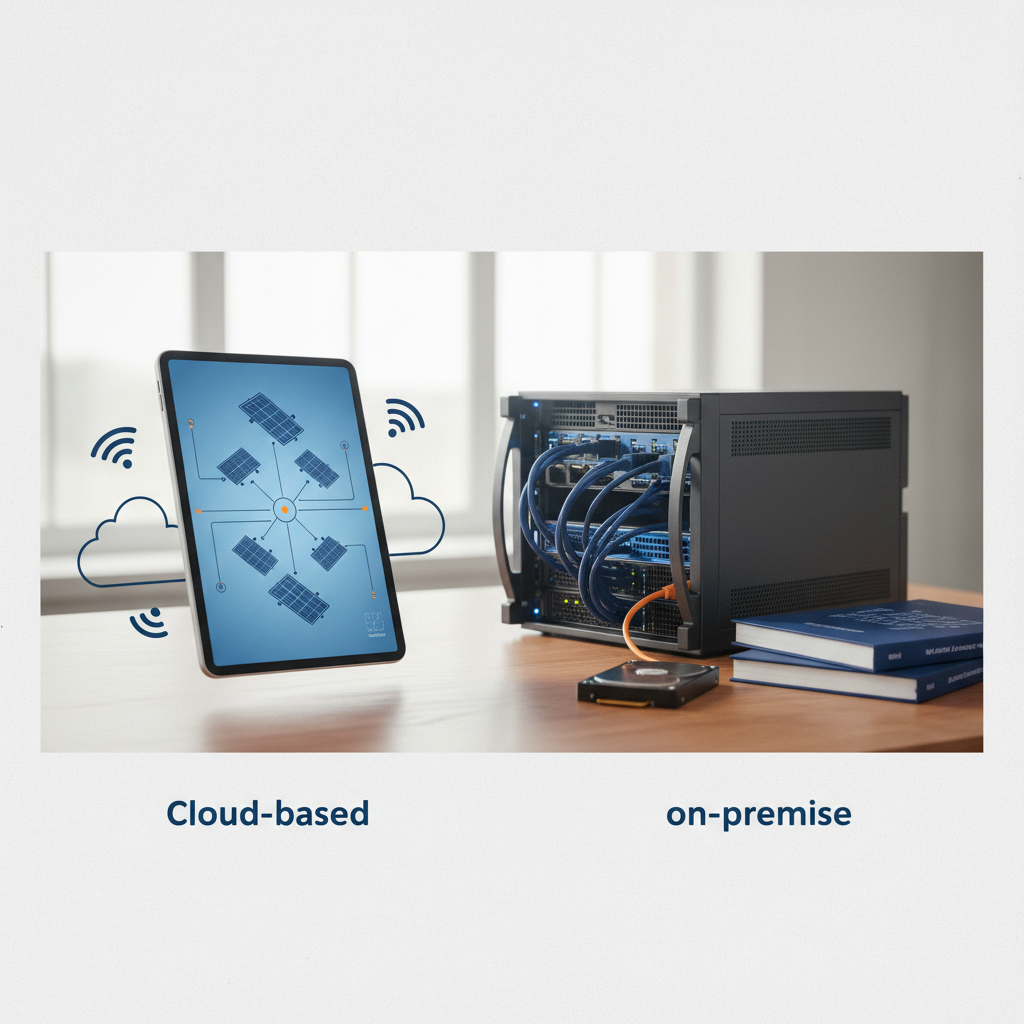
Choosing the right software infrastructure defines your solar business's operational efficiency and growth trajectory. This decision is not just about features; it impacts scalability, data security, and your team's ability to work effectively. Many solar companies face a critical choice: invest in traditional on-premise solutions or embrace the flexibility of cloud-based platforms. Understanding the core differences and their implications for your business is essential. Your software choice directly influences your project pipeline, your finance partners, and your overall profitability. This article breaks down the options, giving you clear insights to make an informed decision for your solar operations.
Understanding On-Premise Solar Solutions
On-premise software operates from your company's physical location. You purchase software licenses and host the applications on your own servers. Your IT team manages maintenance, security, and updates. This model has been the standard for decades, offering a high degree of control over your data and infrastructure.
How On-Premise Works
With an on-premise system, you are responsible for every component. This includes server hardware, operating systems, databases, applications, and network infrastructure. When your sales team needs to access proposals or your EPCs need design files, they connect directly to your internal servers. Updates, patches, and security measures are all handled internally by your IT staff. This model requires significant upfront capital investment for hardware, software licenses, and the personnel to manage it.
Advantages of On-Premise
- Full Control: You retain complete control over your data and infrastructure. This can be critical for companies with stringent compliance requirements or unique security policies.
- Customization: On-premise solutions often allow for deep customization. You can tailor the software precisely to your unique workflows and integrations without relying on a third-party vendor's development schedule.
- Data Security (Perceived): Some businesses feel their data is more secure when it resides within their own physical control. While not always true, it offers a sense of direct oversight.
- No Recurring Subscription Fees: After the initial purchase, there are no ongoing software subscription costs, though maintenance and upgrade costs are significant.
Disadvantages of On-Premise
- High Upfront Costs: Initial investment in servers, licenses, and IT infrastructure is substantial. This can be a barrier for smaller or growing solar companies.
- Maintenance Burden: Your team is responsible for all software updates, security patches, hardware maintenance, and troubleshooting. This diverts resources from core solar activities.
- Limited Scalability: Scaling up requires purchasing and installing more hardware. This process is slow and costly, making it difficult to adapt quickly to changes in demand.
- Accessibility Challenges: Remote access for your sales reps or field installers can be complex and require secure VPNs, which add to IT overhead. Accessing solar data securely outside the office becomes a constant challenge.
- Disaster Recovery: Implementing a robust disaster recovery plan for physical servers is complex and expensive, requiring redundant systems and offsite backups.
Exploring Cloud Solar Software (SaaS for Solar)
Cloud solar software, often delivered as Software as a Service (SaaS), operates differently. The software and its data are hosted on remote servers managed by a third-party provider. Users access the applications over the internet, typically through a web browser. This model has become the dominant choice for modern businesses, including the solar industry.
How Cloud-Based Software Works
With cloud-based solutions, you subscribe to a service. The provider manages all the underlying infrastructure: servers, databases, security, and updates. Your team accesses the platform via the internet, often paying a monthly or annual subscription fee. This means you don't own the software directly; you rent access to it. For example, a modern solar sales platform delivers everything from design tools to financing options through a web interface, allowing your team to work from any location.
Advantages of Cloud-Based Solutions
- Lower Upfront Costs: No large capital expenditure for hardware or software licenses. You pay a predictable subscription fee, shifting from CapEx to OpEx.
- Scalability and Flexibility: Cloud platforms scale instantly. As your business grows, you can easily add more users or features without infrastructure upgrades. This is crucial for managing fluctuating project volumes.
- Remote Access Solar Software: Access the platform from anywhere, on any device with an internet connection. This empowers your sales teams, field installers, and remote staff, improving overall efficiency and collaboration. Your reps can generate proposals from a homeowner's kitchen.
- Automatic Updates and Maintenance: The provider handles all maintenance, security patches, and software updates. Your team always uses the latest version without IT intervention.
- Enhanced Collaboration: Cloud platforms facilitate real-time collaboration among teams, improving communication and workflow efficiency across different departments and locations. A deal built in the field is immediately available to your design team.
- Robust Security (Often Superior): Reputable cloud providers invest heavily in advanced security measures, data encryption, and regular audits, often surpassing what individual companies can afford for on-premise systems. This improves solar data security.
- Disaster Recovery: Cloud providers typically offer built-in disaster recovery and data backup solutions, ensuring business continuity with minimal effort from your side.
Disadvantages of Cloud-Based Solutions
- Internet Dependency: A stable internet connection is mandatory for access. Outages can disrupt operations.
- Less Customization: While many SaaS platforms offer configuration options and APIs for integration, deep customization can be more limited compared to on-premise systems.
- Vendor Lock-in: Migrating data and processes to a different cloud provider can be challenging once deeply integrated.
- Data Control Concerns: Some companies feel less in control when their data is hosted by a third party, despite robust security protocols.
- Ongoing Subscription Costs: Fees are recurring, which can accumulate over time. However, these often replace the hidden costs of on-premise management.
The Hybrid Approach
Some solar companies opt for a hybrid model, combining elements of both cloud and on-premise solutions. This might involve keeping sensitive customer data on-premise while using cloud-based tools for sales and operations. This approach offers a balance, leveraging the strengths of both models while mitigating some of their weaknesses. However, it also introduces complexity in integration and management.
Making the Right Choice for Your Solar Business
Your decision hinges on your specific needs, budget, and long-term strategy. Consider these factors:
- Budget: Can you afford significant upfront capital expenditure, or do you prefer predictable operational expenses?
- Scalability Needs: Do you anticipate rapid growth or fluctuating demand that requires instant scaling?
- IT Resources: Do you have a dedicated IT team to manage servers, security, and updates, or do you prefer offloading that responsibility?
- Security and Compliance: What are your specific requirements for solar data security and regulatory compliance?
- Remote Work Enablement: How critical is it for your team to have seamless Key Features to Look for in an All-in-One Solar Sales Platform remote access solar software for sales and field operations?
For most modern solar companies, especially those focused on rapid growth and efficiency, cloud solar software offers compelling advantages. The ability to access data from anywhere, scale operations quickly, and offload IT maintenance allows you to focus on selling and installing more solar. Cloud solutions reduce the operational friction that legacy systems often create. They ensure your team always has the tools they need, wherever they are, and keep your deal flow moving.
When evaluating different platforms, remember that the best solar sales software is one that integrates design, proposal, and financing in one place, like Solentrex. This ensures data consistency and prevents errors. Our platform ensures every deal is viable. It blocks flawed proposals from advancing before anyone signs. This "hard gate" prevents costly change orders and protects your margins. Your sales reps focus on closing, your designers on optimizing, and your finance partners on funding, all within a unified, secure environment. Choosing the Best Solar Sales Software: Comprehensive Guide For more on platform features, see our guide on Evaluating Solar Financing Platforms: What Finance Partners Need to Know.
Conclusion: Future-Proof Your Solar Operations
The shift to cloud-based solutions is not just a trend; it's an evolution in how businesses operate. For solar companies, embracing SaaS for solar translates directly into improved sales efficiency, reduced operational costs, and enhanced data security. By choosing a robust cloud solar software platform, you equip your team with the tools needed to thrive in a competitive market. Make an informed decision that future-proofs your operations and supports your long-term success. Evaluate providers based on their ability to deliver secure, scalable, and accessible solutions that meet your exact business needs.
Ready to transform your solar business operations with a cutting-edge cloud solution? Explore how Solentrex can streamline your sales, design, and financing processes. Contact us today for a personalized demonstration.
Frequently asked questions
What is cloud solar software?
Cloud solar software is hosted on a third-party provider's remote servers and accessed over the internet, typically through a web browser. Users pay a subscription fee, and the provider manages all infrastructure, maintenance, and updates.
What are the main advantages of cloud-based solar solutions?
Cloud-based solutions offer lower upfront costs, instant scalability, remote access from anywhere, automatic updates, enhanced collaboration, and robust security managed by the provider.
Why would a solar company choose on-premise software?
Companies might choose on-premise for full control over their data and infrastructure, extensive customization options, and a preference for perceived in-house data security, often after significant upfront investment.
How does remote access benefit my solar sales team?
Remote access solar software allows sales teams to generate proposals, access customer data, and update project statuses from any location, like a homeowner's residence, significantly improving efficiency and responsiveness.
Is solar data security better with cloud or on-premise solutions?
While on-premise offers direct control, reputable cloud providers often invest more heavily in advanced security measures, data encryption, and regular audits than individual companies can, often resulting in superior solar data security.