
Blog · Solar Sales
Key Features to Look for in an All-in-One Solar Sales Platform
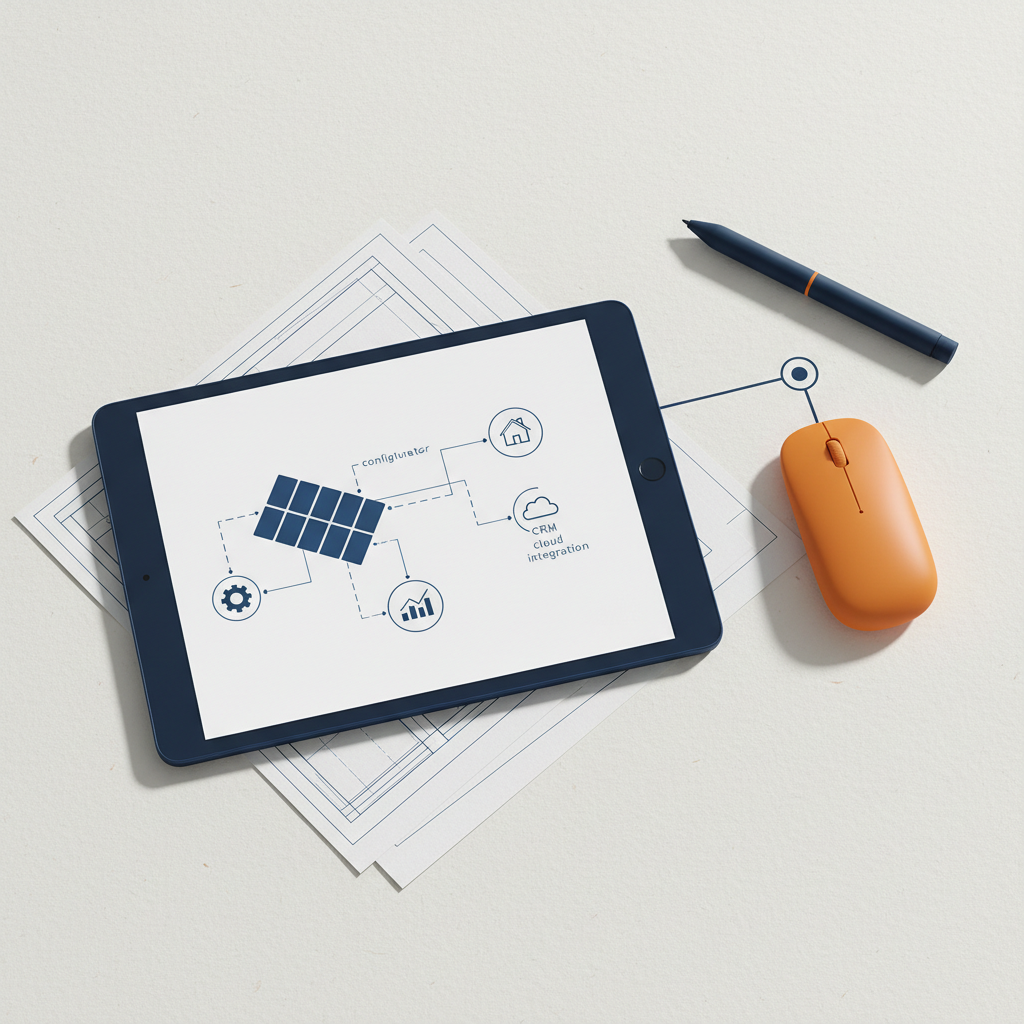
Solar sales demand precision. Every proposal, every design, every financial model needs accuracy. Your sales teams need tools that reduce friction, not create it. An all-in-one solar sales platform promises efficiency, but distinguishing essential features from mere add-ons is critical. This guide breaks down the core components your business needs to operate profitably and scale effectively. You need to know which solar software features drive real results.
Why an Integrated Solar Platform is Essential
Fragmented workflows cost money. Moving data between disparate systems introduces errors and slows down your sales cycle. An integrated solar platform centralizes your operations. It connects sales, design, and finance. This cohesion eliminates manual data entry. It ensures every department works from a single source of truth. This is not about convenience; it is about profitability. Look for a system that truly integrates, not just one that loosely connects.
The Cost of Disconnected Systems
Manual data transfer creates delays. It generates errors. Each error costs time and money to correct. Consider the time a design team spends re-entering customer details. Think about finance partners re-verifying credit checks. These are inefficient steps. An all-in-one solution removes these bottlenecks. It means faster proposals. It means quicker installations. This directly impacts your bottom line.
Improving Data Accuracy and Compliance
Consistent data is accurate data. An integrated platform enforces data standards. It prevents discrepancies. This is vital for compliance. Regulatory bodies require precise documentation. Your financing partners demand accurate project details. A unified system ensures this accuracy from lead to installation. It builds trust with customers and partners alike.
Core Solar Software Features for Design and Engineering
Accurate design is the foundation of a successful solar project. Your design tools must be robust and reliable. They must handle complex scenarios. They need to integrate directly with your sales and financial modeling. These solar software features are non-negotiable for EPCs and sales teams.
Advanced Solar Design Tools
Your platform needs sophisticated solar design tools. This includes high-resolution imagery. It needs precise 3D modeling capabilities. Per-panel modeling is a requirement. This accounts for shading, tilt, and azimuth for every single module. Generic system-level estimates are no longer sufficient. Your designs must reflect real-world conditions. This ensures accurate production estimates. It prevents change orders down the line.
Automated Proposal Generation
After design, a proposal must be generated quickly. The platform should auto-populate proposals with design data. This includes system size, production estimates, and equipment lists. Customization options are important. Your sales team needs to tailor proposals to each homeowner. The proposal must be clear, concise, and professional. It must clearly articulate the financial benefits. This speeds up the sales process.
Interoperability with CAD and Engineering Tools
For complex commercial projects or unique residential installations, your platform needs to communicate with specialized engineering software. It must allow import and export of design files. This ensures your engineering team can perform detailed structural or electrical analyses without starting from scratch. It maintains design integrity across different stages.
Essential Solar CRM Features for Sales Efficiency
Sales drives your business. Your CRM needs to be purpose-built for solar. Generic CRMs often fall short. They do not understand the unique sales cycle of solar. Solar CRM features must track leads, manage customer interactions, and facilitate a smooth sales process.
Lead Management and Tracking
From initial inquiry to signed contract, your platform must track every lead. It needs robust lead capture capabilities. This includes web forms, referrals, and integrated calling features. Automated lead routing ensures the right salesperson gets the lead. Detailed activity logging keeps a history of all interactions. This prevents leads from falling through the cracks.
Sales Pipeline Management
Visualize your pipeline. The platform should offer clear dashboards. Sales managers need to see where every deal stands. Drag-and-drop functionality for moving deals through stages improves usability. Forecasting tools are critical for planning. They help you anticipate revenue. They help you manage your resources effectively.
Communication and Collaboration Tools
Internal communication is vital. Your team needs to collaborate seamlessly. The platform should include internal chat or commenting features. It should allow for easy document sharing. Everyone on the team needs access to the latest project information. This reduces miscommunication. It speeds up decision-making. Your finance partners also need access to relevant deal information, streamlining their underwriting process.
Financial Modeling and Proposal Tools
Financing is often the most complex part of a solar sale. Your platform must simplify it. It needs to provide accurate financial models. It must support multiple financing options. This is where an integrated platform truly shines for EPCs and finance partners.
Accurate Financial Modeling
Your platform must generate precise financial projections. This includes cash flow analyses, ROI calculations, and savings estimates. It needs to factor in local incentives, tax credits, and utility rates. The financial model must update dynamically with design changes. This ensures the customer receives accurate savings figures every time. The hard gate functionality blocks any flawed deal from advancing, ensuring financial integrity before any paperwork is signed.
Support for Multiple Financing Options
Homeowners choose different ways to pay for solar. Your platform needs to model loans, leases, PPAs, and cash purchases. It should integrate with various financing partners. This gives your sales team flexibility. It allows them to offer tailored solutions. This reduces deal friction. This is a core component of Evaluating Solar Financing Platforms: What Finance Partners Need to Know.
Integration with Utility Rate Structures
Utility rates are complex and dynamic. Your platform must have an up-to-date database of utility tariffs. It needs to accurately calculate savings based on interval data if available. This level of detail builds homeowner confidence. It ensures the proposed savings are realistic.
Contract Management and E-Signing for Solar
Closing the deal requires efficient paperwork. Manual contracts introduce delays and errors. E-signing for solar streamlines this final step. It ensures contracts are complete and compliant.
Digital Document Management
All project documents need a central repository. This includes proposals, contracts, permits, and change orders. The platform should organize these documents logically. Version control is important. Everyone needs access to the most current files. This eliminates confusion.
Integrated E-Signing Capabilities
Secure e-signing is non-negotiable. Homeowners expect a simple, digital signing process. The platform must integrate e-signature functionality directly. This accelerates the contract phase. It reduces paper waste. It provides a legally binding digital audit trail. This ensures your contracts are executed quickly and compliantly.
Automated Contract Generation and Compliance Checks
Your platform should generate contracts based on approved proposals. It needs to incorporate your company's legal templates. Automated compliance checks are vital. These checks ensure all required fields are completed. They verify that all regulatory disclosures are present. This hard gate prevents errors. It protects your business from legal risks. It saves time for your back office.
Reporting and Analytics
What gets measured gets managed. Robust reporting and analytics provide insights into your operations. They help you identify strengths and weaknesses. They drive strategic decisions.
Performance Dashboards
Real-time dashboards provide an overview of your business. Sales managers see team performance. EPCs track installation progress. Finance teams monitor funding status. These dashboards offer immediate insights. They help you react quickly to changing conditions.
Customizable Reports
Every department has unique reporting needs. The platform should allow for custom report generation. This means you can analyze specific metrics. You can track individual KPIs. This flexibility ensures everyone gets the data they need. It informs better business decisions. This ties directly into Calculating ROI: Justifying Investment in a New Solar Sales Platform.
Forecasting and Trend Analysis
Beyond current performance, you need to look ahead. The platform should offer forecasting tools. It should identify trends in sales, installations, and financial performance. This helps with resource allocation. It informs your growth strategy. It helps you prepare for market shifts. This deep dive into data is a core reason to read Choosing the Best Solar Sales Software: Comprehensive Guide.
Seamless Integrations with Third-Party Systems
No single platform does everything. Your chosen solution must play well with others. Integrations extend its capabilities. They connect your solar platform to your broader tech ecosystem.
CRM and ERP Integrations
Your solar platform needs to integrate with existing CRM or ERP systems. This avoids data duplication. It ensures a holistic view of your customer and business operations. It creates a single source of truth for all business data.
Accounting and Billing Software Integration
Financial data flows from sales to accounting. Integration with platforms like QuickBooks or SAP is crucial. This automates invoicing. It streamlines payment processing. It simplifies financial reporting. This saves your accounting team significant time.
API Access and Custom Webhooks
For unique business needs, robust API access is essential. This allows your IT team to build custom integrations. Webhooks provide real-time data exchange. This ensures your platform can adapt to future requirements. It provides ultimate flexibility.
Conclusion: Investing in the Right Platform
Choosing an all-in-one solar sales platform is a strategic decision. It impacts your sales velocity, operational efficiency, and profitability. Prioritize platforms with advanced solar design tools, comprehensive solar CRM features, robust financial modeling, and secure e-signing for solar. The platform must incorporate a hard gate to block flawed deals, ensuring accuracy from start to finish. Invest in a solution that empowers your teams, reduces errors, and ultimately drives more signed contracts. Evaluate each feature against your operational needs. This due diligence ensures your investment pays dividends for years to come.
Ready to Optimize Your Solar Sales Process?
Take the next step. Explore platforms that integrate design, sales, and financing. Understand how a unified system can transform your operations. Request a demonstration and see these features in action. Your business deserves a platform that works as hard as you do. Ensure your sales teams are equipped with the best tools to succeed. Find a solution that brings confidence to every deal and ensures every project is profitable. An effective all-in-one solar sales platform must integrate advanced design, comprehensive CRM, robust financial modeling with a hard gate, and secure e-signing capabilities to ensure accuracy, efficiency, and profitability.
Frequently asked questions
What is a 'hard gate' in a solar sales platform?
A hard gate is a critical feature in an all-in-one solar sales platform that automatically blocks a flawed deal from advancing. This prevents errors in design, financial modeling, or compliance from reaching the customer or being signed, ensuring data accuracy and protecting profitability.
Why are integrated solar design tools more beneficial than standalone software?
Integrated solar design tools feed directly into financial models and proposals, eliminating manual data transfer and potential errors. This streamlines the sales process, ensures accuracy, and speeds up proposal generation compared to disconnected standalone software.
How do solar CRM features differ from generic CRM systems?
Solar CRM features are specifically designed for the unique solar sales cycle. They include specialized lead tracking for solar, pipeline management tailored to solar project stages, and tools that understand the nuances of solar financing and installation processes, unlike generic CRMs.
What is the importance of e-signing for solar contracts?
E-signing for solar contracts significantly accelerates the sales closing process. It provides a secure, legally binding digital signature, reduces paperwork, minimizes errors, and offers a clear audit trail, improving efficiency and compliance for both customers and companies.
How does an integrated platform improve financial accuracy for solar projects?
An integrated platform ensures financial models are directly linked to design specifications and utility rate data. It dynamically updates calculations, factors in incentives accurately, and uses hard gates to prevent incorrect financial proposals from being presented, leading to more precise savings estimates and profitable deals.