
Blog · Design
Why Are My Solar Designs Inaccurate? Common Pitfalls and How to Avoid Them
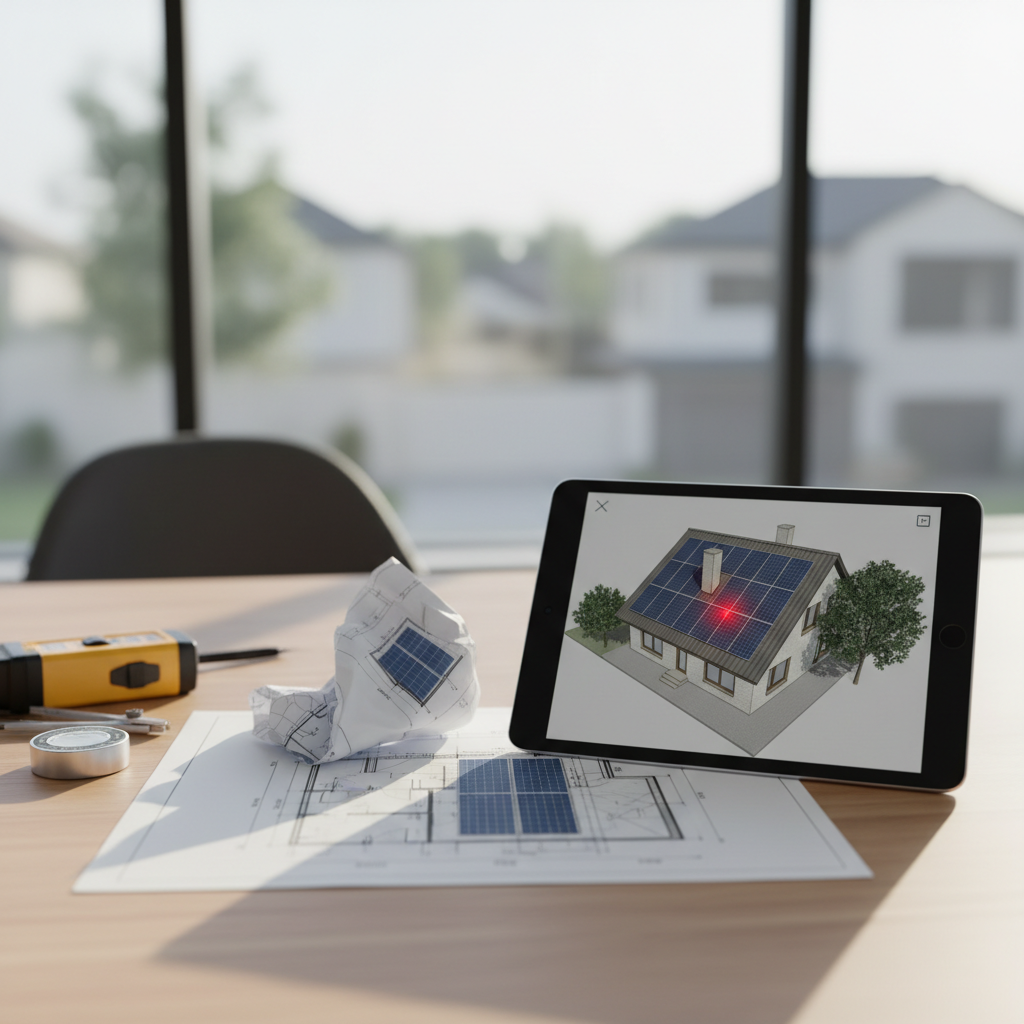
Inaccurate solar designs cost your business time and money. They lead to change orders, customer frustration, and reduced profitability. Your sales team loses credibility. Your installers face delays. Your finance partners see higher risk. These issues compound, slowing your pipeline and impacting your bottom line. Addressing these inaccuracies is critical for any solar professional.
This article outlines common causes of inaccurate solar designs. We also show how modern tools prevent these mistakes, ensuring your proposals are precise and profitable. You need to understand the sources of these errors. You need to implement solutions that ensure accuracy from the first proposal to commissioning.
The Real Cost of Inaccurate Solar Designs
Inaccurate designs create a ripple effect across your operations. The initial design flaws manifest as problems during installation. This often results in costly change orders. Each change order adds administrative burden. It consumes installer time. It delays project completion. This directly impacts your project's profitability.
Customer satisfaction also suffers. Homeowners expect their solar installation to match the initial proposal. Deviations erode trust. They can lead to negative reviews. They can even result in project cancellations. Your sales team works hard to close deals. Inaccurate designs undermine their efforts.
For finance partners, design accuracy is paramount. Loan approvals are based on projected savings. Navigating Solar Loan Rejections: Strategies for Finance Partners and Sales Teams If the system design is flawed, the projected savings are flawed. This increases the risk for lenders. It makes securing financing more challenging for your customers.
Ultimately, errors in design create inefficiencies. They stress relationships. They impact financial performance. This is why addressing `inaccurate solar designs` is a foundational step toward operational excellence.
Common Pitfalls Leading to Inaccurate Solar Designs
Several factors contribute to `solar site assessment errors` and subsequent design inaccuracies. Identifying these pitfalls is the first step toward prevention.
Manual Data Collection and Human Error
Traditional site assessments often rely on manual measurements and observations. A rep uses a tape measure. They manually plot roof obstructions. They manually estimate shading. This process is slow. It is prone to error. Miscalculations of roof dimensions are common. Incorrect identification of vent pipes or chimneys occurs often. Inaccurate shading analysis leads to over- or under-sizing systems. These manual errors directly impact system performance projections.
Outdated or Low-Resolution Imagery
Many solar sales teams still use outdated or low-resolution satellite imagery for initial designs. These images do not show current roof conditions. They cannot identify new obstructions. They do not capture seasonal shading accurately. Designing from poor imagery leads to systems that do not fit. It leads to proposals that promise unrealistic energy production. Your reps need current, high-resolution visual data to design with confidence.
Inadequate Shading Analysis
Shading is a primary determinant of solar system performance. Legacy design processes often involve simple visual estimations or generic modeling. These methods fail to account for complex shading patterns. Over-shading reduces energy production. Under-shading leads to customer dissatisfaction when the system underperforms. Accurate `solar site assessment errors` prevent this. It requires precise, granular shading analysis.
Neglecting Electrical Constraints and Code Requirements
Designs must comply with local electrical codes and utility requirements. Ignoring these constraints during the design phase creates significant problems during permitting and installation. For example, local ordinances in Goodyear, AZ, might have specific setbacks or conduit run requirements. Failing to account for these from the start means costly revisits and redesigns. This is a common source of delays and change orders. Minimizing Solar Project Delays: Best Practices for EPCs and Installers
`Solar Design Software Limitations`
Even with software, limitations exist. Many older or less advanced platforms cannot perform per-panel modeling. They struggle with complex roof geometries. They do not integrate real-time interval data from utilities. These limitations force designers to make assumptions. The assumptions introduce inaccuracies. Your solar design tools must match the complexity of modern solar installations.
Lack of Integration Between Sales, Design, and Operations
When sales, design, and operations use separate systems, information silos form. A change made in one department may not propagate to another. This leads to inconsistent data. It results in outdated designs. It creates duplicate efforts. This disjointed workflow increases `solar site assessment errors` and project delays. The Hidden Costs of Manual Processes in Solar Sales and Operations
How to `Prevent Solar Design Mistakes` with Advanced Solutions
Solving these challenges requires a systematic approach. Adopt tools and workflows that prioritize accuracy and integration. Your goal is to `improve solar design accuracy` from the start.
Implement High-Resolution, Real-Time Aerial Imagery
Invest in platforms that provide current, high-resolution aerial imagery. This allows your designers to zoom in on specific roof details. They can identify obstructions with clarity. They can plan panel layouts with precision. This reduces the need for costly site visits for initial estimates. Your proposals are more accurate from day one.
Utilize Per-Panel Shading and Energy Production Modeling
Advanced design software performs per-panel shading analysis. It simulates energy production for each individual panel. This accounts for complex roof lines and adjacent obstructions. This level of detail results in highly accurate production estimates. Your customers get realistic savings projections. Your finance partners get dependable data. The `.5 meter accuracy` modeling ensures precision.
Integrate with Utility Interval Data
Connecting your design platform to utility interval data provides actual consumption patterns. This removes assumptions about customer energy use. Your system sizing is based on real-world data, not estimates. This ensures the proposed system truly meets the homeowner's needs. It maximizes their savings.
Streamline Workflows with a Unified Platform
Adopt a unified platform that connects your sales, design, and operations teams. This eliminates data silos. Design changes update in real-time across all departments. Approvals for designs are hard-gated. A flawed design cannot progress. This ensures consistency and prevents errors from propagating down the pipeline. Your team works from a single source of truth.
- Step 1: The sales rep creates a preliminary design with high-resolution imagery. The system automatically flags potential issues like shading.
- Step 2: The design team refines the proposal using per-panel modeling and interval data. The platform provides `3D modeling` for clarity.
- Step 3: The finance team reviews the system performance data. The platform ensures projected savings are locked before loan documents are generated. This prevents loan rejections due to design flaws.
This three-step process takes about `3 minutes` from start to design. It brings efficiency and accuracy. Your sales teams generate proposals in `about 3 minutes` that are precise and ready for financing.
Employ `Hard Gates` to Enforce Accuracy
A "hard gate" is a crucial feature in advanced solar platforms. It prevents a design from moving forward if it contains critical errors or non-compliance issues. For example, if a design does not meet local setback requirements, the system blocks its progression. This forces correction at the design stage. It eliminates costly rework later in the project lifecycle. This is how you `prevent solar design mistakes` at scale.
`Improving Solar Design Accuracy` for Your Business
Your success in solar depends on consistent, accurate proposal generation. By addressing `inaccurate solar designs` head-on, your business will benefit from:
- Reduced operational costs: Fewer change orders, less rework.
- Faster sales cycles: Quick, accurate proposals build customer confidence.
- Higher customer satisfaction: Systems perform as promised.
- Improved financing success: Lenders trust your projections.
Solentrex provides the tools to achieve this. Our platform offers `3D modeling`, per-panel analysis, and hard gates to ensure accuracy. Your designs are compliant. Your savings are locked. Our `3 minutes` to design, `about 3 minutes` for comprehensive proposals, empowers your sales and design teams.
The Solentrex Difference: Precision and Profitability
Solentrex eliminates `solar site assessment errors` and `solar design software limitations`. We provide the framework to `improve solar design accuracy` across your entire operation. Your sales reps can instantly generate precise proposals. Your operations team works from verified designs. Your finance partners approve loans with confidence. This transforms your sales pipeline and dramatically reduces your soft costs.
Learn how accurate designs translate into more closed deals and greater profitability. Discover how Solentrex can help your business overcome common challenges in solar sales. Solving Common Challenges in Solar Sales: From Inaccurate Designs to Loan Rejections
Ready to Eliminate Inaccurate Solar Designs?
Stop losing money and time to design errors. Solentrex empowers your team with the precision tools needed to elevate your solar business. Visit Solentrex.com to schedule a demo and see how our platform transforms your design and sales process. Secure accurate designs and profitable projects, every time.
Frequently asked questions
What are the most common reasons for inaccurate solar designs?
Common reasons include manual data collection errors, use of outdated or low-resolution imagery, inadequate shading analysis, neglecting electrical constraints, limitations of older solar design software, and lack of integration between sales, design, and operations teams.
How do inaccurate designs impact solar sales and profitability?
Inaccurate designs lead to costly change orders, project delays, reduced customer satisfaction, eroded trust, and higher risk for finance partners, ultimately impacting your sales team's credibility, increasing operational costs, and decreasing overall profitability.
What is 'per-panel shading and energy production modeling' and why is it important?
Per-panel modeling simulates energy production for each individual solar panel, accounting for complex roof lines and site-specific shading. This provides highly accurate production estimates, ensuring realistic savings projections for customers and reliable data for finance partners.
What is a 'hard gate' feature in solar design software?
A 'hard gate' is a critical feature that prevents a design from progressing if it contains errors, non-compliance issues (e.g., local setback violations), or other critical flaws. This ensures corrections are made early in the design stage, preventing costly rework later in the project lifecycle.
How can integrating utility interval data improve solar design accuracy?
Integrating utility interval data provides actual customer energy consumption patterns, removing assumptions about energy use. This allows for system sizing based on real-world data, ensuring the proposed system precisely meets the homeowner's needs and maximizes their savings.