
Blog · Design
Top Solar Design Software Platforms Comparisons
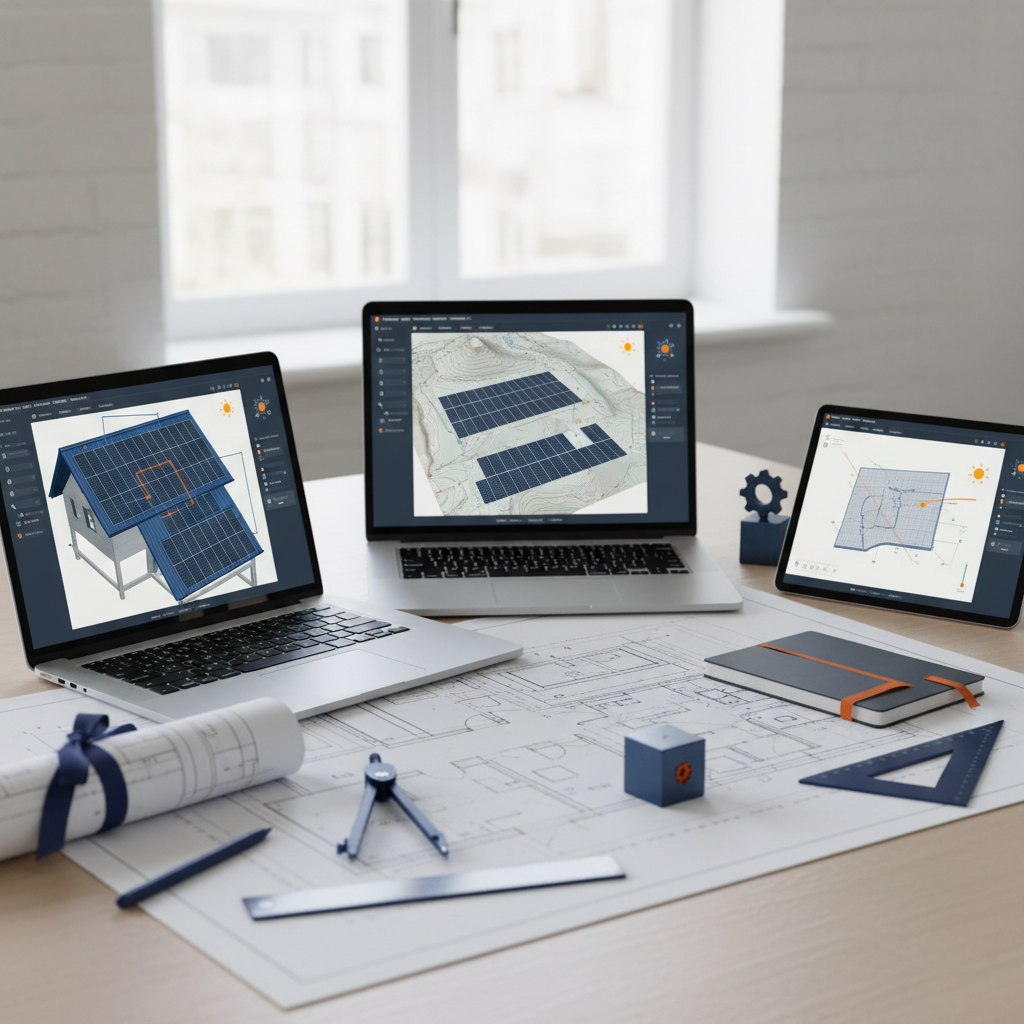
Solar companies face a critical decision: selecting the right design software. This choice impacts everything from proposal accuracy to operational efficiency and customer trust. A flawed design jeopardizes project viability and your reputation. Accurate solar proposals depend on robust solar design software.
This article provides a comprehensive solar design software comparison. We will review leading pv design tools, evaluating their features, accuracy, and integration capabilities. The goal is to help you select the best platform for your sales and installation teams.
The Critical Role of Solar Design Software
Solar design software is the foundation of every successful project. It moves beyond simple panel layouts. It models energy production, identifies shading, and optimizes system performance. Inaccurate designs lead to costly change orders and dissatisfied customers.
Beyond Basic Design: Impact on Sales and Operations
Your design platform directly influences sales conversion rates. Customers commit to proposals that clearly demonstrate savings and performance. Accurate 3D solar modeling software is key to building that trust. It translates complex technical data into understandable visual proposals and accelerates the sales cycle. For operations, accurate designs minimize on-site surprises reducing installation time, costs, and rework.
Why Accuracy is Non-Negotiable
In solar, precision drives profit. An over-estimated system fails to meet production guarantees, while an under-estimated system leaves money on the table. Both scenarios damage your bottom line and your brand. Accurate designs ensure correct system sizing, component selection, and financial projections. They allow you to guarantee customer savings, which is a major sales driver. This is a core component of "Choosing the Best Solar Sales Software: A Comprehensive Buyer's Guide for 2026" Choosing the Best Solar Sales Software: A Comprehensive Buyer's Guide for 2026.
Key Features in Leading PV Design Tools
Evaluating design tools requires a focus on core capabilities. Not all platforms offer the same level of detail or integration so look for these essential features.
3D Solar Modeling and Shading Analysis
Advanced 3D solar modeling software uses high-resolution imagery and precise algorithms. It maps roof characteristics and identifies shading obstructions. This includes trees, chimneys, and adjacent buildings. The software should accurately calculate irradiance values across the array to create accurate energy production estimates.
Tip: Verify the platform's data sources. High-resolution imagery (e.g., LiDAR) provides superior accuracy for shading analysis.
Common Mistake: Relying on 2D layouts. These cannot account for critical shading patterns that impact system performance.
Energy Production Simulation
This feature predicts how much energy a system will generate annually. It considers local weather data, panel orientation, tilt, and shading. The best platforms offer granular, per-panel modeling for optimization even on complex roofs and ensures accurate financial projections for the customer.
Tip: Look for platforms that integrate with real-time or historical weather databases for precise simulations.
Common Mistake: Using generic production estimates. These often lead to discrepancies between promised and actual generation.
Proposal Generation and Financial Modeling
Integrated proposal tools generate professional, branded documents. These include system specifications, performance estimates, and financial breakdowns to show projected savings and ROI. The best platforms allow for dynamic adjustments during sales presentations. This includes different financing options or panel counts. This streamlines your solar design workflow.
Tip: Ensure the software can model various financing structures: cash, loan, PPA, and lease.
Common Mistake: Separating design from proposal generation. This introduces manual errors and slows down the sales process.
CAD Functionality and Permitting Tools
Some platforms offer robust CAD capabilities to provide detailed electrical and mechanical design. It also helps generate permit-ready plans. This feature accelerates the permitting process and reduces engineering hours.
Tip: Check if the software exports files compatible with local permitting requirements.
Common Mistake: Creating permit drawings manually. This is time-consuming and prone to errors.
API Integrations and Data Flow
A modern solar design platform must integrate with your existing tech stack. This includes CRM systems, financing portals, and operational software. Smooth data flow prevents data re-entry, reduces errors, and insures consistency across your pipeline. This is critical for managing your "Solar Sales Tech Stack" Future-Proofing Your Solar Sales Tech Stack and optimizing "Solar Financing Integration Software" Key Features to Look for in Robust Solar Financing Integration Software.
Tip: Prioritize platforms with open APIs. This allows for custom integrations and future flexibility.
Common Mistake: Choosing a standalone design tool creates data silos and inefficiencies.
Solar Design Software Comparison: Leading Platforms
We will compare common types of solar design software platforms. Each has strengths and weaknesses. Your choice depends on your specific operational needs and budget.
All-in-One Solar Sales Platforms (e.g., Solentrex)
These platforms integrate design, proposal, CRM, and financing tools into a single ecosystem. Solentrex, for example, prioritizes accurate, hard-gated designs. This means the system blocks a flawed deal from advancing before anyone signs and prevents incorrect proposals from reaching customers.
Strengths: Unmatched data consistency. Streamlined solar design workflow from lead to installation reduces manual handoffs and provides proposals in about 3 minutes. Offers a single source of truth for all project data and includes robust validation steps to ensure accuracy.
Best For: Companies seeking maximum efficiency, data integrity, and a unified operational view. These platforms are ideal for those who value the hard gate.
Dedicated Design Software
These platforms focus solely on detailed design and production modeling. They often offer advanced CAD features.
Strengths: Deep technical design capabilities. Excellent for complex engineering challenges and often provide highly detailed output for permitting.
Weaknesses: Limited or no integration with sales and financing. Requires manual data transfer to other systems creating potential for data discrepancies. Does not offer a hard gate to prevent flawed proposals.
Best For: Engineering teams needing specific, highly technical design features. They are best when paired with an integrated sales platform.
Cloud-Based Design Tools
These are often simpler, browser-based tools. They offer quick, basic designs and proposals.
Strengths: Easy to use, accessible from anywhere, and lower cost of entry.
Weaknesses: Less accurate 3D solar modeling. Limited shading analysis. Basic financial modeling. May lack crucial integration capabilities. Often relies on less granular data. Does not include a hard gate.
Best For: Smaller sales teams needing quick estimates for initial customer conversations. Not suitable for final proposals or complex projects.
Open-Source Solutions
Open-source options provide flexibility. They require significant technical expertise for implementation and maintenance.
Strengths: No licensing fees. Highly customizable for specific needs. Community support.
Weaknesses: Requires in-house development resources. No dedicated customer support. Lacks professional-grade imagery, data, and no hard gate. Does not offer a polished user experience.
Best For: Companies with strong internal development teams and very specific, niche requirements.
The Solentrex Difference: Hard-Gated Accuracy
Solentrex focuses on eliminating errors at the earliest stage. Our platform incorporates a "hard gate." This means designs must pass rigorous validation checks before they can move forward. This prevents incorrect system sizing, flawed energy production estimates, or non-compliant layouts from ever reaching a customer. It is a locked number approach.
This hard gate protects your margins, safeguards your reputation, and ensures every proposal you generate is accurate and reliable.
Making Your Decision
Choosing the right solar design software requires careful consideration. Prioritize accuracy, integration, and ease of use. Evaluate how each option supports your entire solar design workflow, from lead to installation.
Consider your long-term growth. Will the software scale with your business? Does it offer the robust features you need for complex projects? Investing in a comprehensive platform like Solentrex ensures you deliver accurate, compelling proposals every time. This drives sales and customer satisfaction.
Ready to Optimize Your Solar Design Workflow?
Don't let inaccurate designs cost you sales and increase operational headaches. Explore how Solentrex's hard-gated design accuracy can transform your sales process and improve your bottom line. Contact us today for a demo and see the difference precise 3D solar modeling software makes. Invest in a platform that guarantees performance and customer trust. Learn more about how we help companies nationwide achieve these goals. Choosing the Best Solar Sales Software: A Comprehensive Buyer's Guide for 2026
Frequently asked questions
What is the most important feature in solar design software?
Accuracy in 3D solar modeling and energy production simulation is paramount. This ensures reliable proposals and avoids costly errors during installation.
How does solar design software impact sales?
Accurate, visually compelling designs build customer trust and clearly demonstrate savings, accelerating the sales cycle and increasing conversion rates.
What is a 'hard gate' in solar design software?
A hard gate is a validation step within the software that prevents flawed or inaccurate designs from progressing to the proposal stage, ensuring only reliable proposals reach customers.
Should I choose dedicated design software or an all-in-one platform?
All-in-one platforms generally offer better efficiency, data consistency, and integration with sales and financing tools. Dedicated design software is better for niche, highly technical engineering needs, but lacks integrated sales workflow.
Can solar design software help with permitting?
Yes, many advanced platforms include CAD functionality to generate permit-ready plans, streamlining the approval process and reducing engineering time.