
Blog · Solar Sales
The Negative Impact of Solar Change Orders on Profitability and Reputation
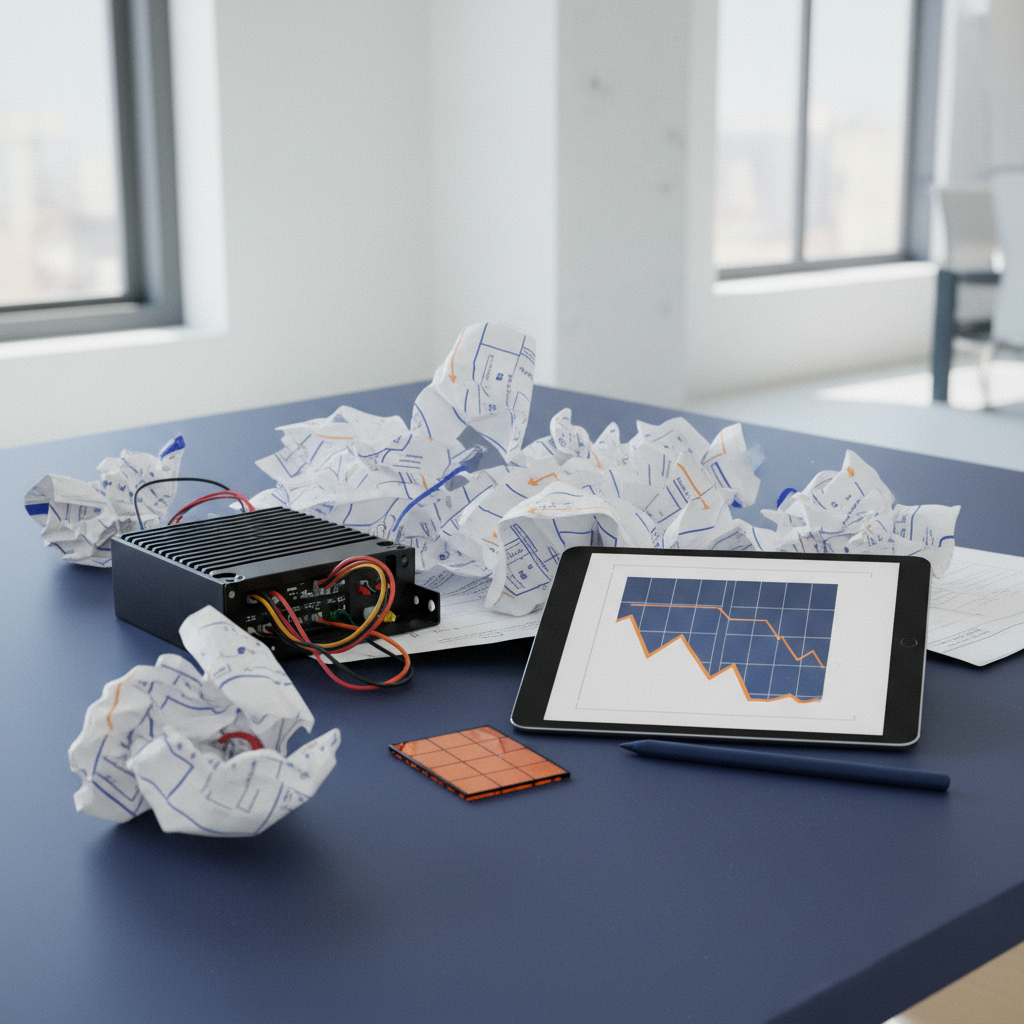
Solar change orders are a drain. Every project change costs money. They cause delays, erode profit margins, and damage your company's standing. This article explores how frequent change orders impact your solar business and provides strategies to mitigate their effects. Understanding these dynamics is crucial for maintaining a healthy pipeline and a strong reputation.
The Financial Erosion Caused by Solar Change Orders
High change order rates hit your bottom line directly. Each change requires re-engineering, re-permitting, and rescheduling. These are not minor adjustments; they are significant operational disruptions with measurable costs.
Direct Costs: Labor, Materials, and Administrative Overhead
When a change order is issued, several cost categories are immediately affected. Your design team must revise schematics. Your permitting team must resubmit applications. Your procurement team may need to adjust material orders. Each step adds labor hours. Each new pull of materials introduces potential waste or overstock.
Consider a typical solar project. A change order for a panel relocation requires a structural review. It demands updated electrical diagrams. This is not a simple fix. It is a multi-departmental effort, each adding to your overhead.
Hidden Costs: Project Delays and Resource Reallocation
Beyond direct expenses, change orders create significant indirect costs. Project delays are a primary concern. Every day a project is delayed, your capital is tied up longer. Crews sit idle or are shuffled to other jobs, impacting efficiency across your entire operation. This directly affects your ability to take on new projects, slowing your sales velocity.
Furthermore, resource reallocation is a major hidden cost. Your project managers, engineers, and installers are pulled away from new, productive tasks to address rework. This creates a ripple effect, delaying other projects down your pipeline. You lose momentum. This directly impacts your revenue projections and overall profitability. High change order rates contribute to "The Hidden Costs of Inefficient Solar Sales: How to Identify and Eliminate Profit Drains".
The Toll on Customer Satisfaction and Your Reputation
Change orders infuriate customers. They expect a smooth process. When designs shift, timelines extend, costs unexpectedly rise, and trust erodes. This directly impacts your company's reputation and future sales.
Eroding Trust and Fueling Customer Dissatisfaction Solar
Customers sign agreements based on a clear scope of work and a firm price. When a change order comes through, it signals a failure in the initial planning or execution. Homeowners become frustrated with unexpected delays. They question your expertise leading to customer dissatisfaction and a negative perception of your service.
Your sales reps face significant pushback. The initial proposal, which took time to create and sell, loses credibility. Your finance partners see increased risk. This cycle of distrust is difficult to break. A customer expects their solar installation to be completed on schedule. Unexpected changes undermine that expectation.
Reputation Damage Solar and Its Long-Term Consequences
Word-of-mouth is a powerful force in solar sales. Negative reviews or complaints about frequent change orders can permanently damage your brand. In today's connected world, a single unhappy customer can influence many potential clients leading to reputation damage and ability to secure new contracts.
Lost referrals are a direct consequence. When customers are dissatisfied, they do not recommend your company. This shrinks your organic lead generation, forcing you to spend more on marketing and direct sales efforts. Your sales team face an uphill battle when your company has a reputation for rework, making it harder to convert leads.
Preventing Change Orders: A Proactive Approach
Preventing change orders starts with a robust, accurate design and sales process. This involves leveraging technology and implementing strict quality controls from the outset.
Step 1: Accurate Initial Site Assessment and Design
The most effective way to prevent change orders is to get it right the first time. Solentrex provides per-panel modeling. This level of detail in the design phase identifies potential issues before they become costly changes and locks in production numbers. Accurate designs mean fewer surprises down the line. It avoids "The True Cost of Manual Solar Design and Proposal Generation Errors".
Step 2: Comprehensive Proposal Generation
Your proposals must reflect the accurate design and all associated costs. Transparency is key. Clearly outline the scope of work, material choices, and estimated timeline. Any assumptions or potential contingencies should be communicated upfront.
Solentrex generates proposals in about 3 minutes. These proposals are built from the accurate design, reflecting real-world energy production and savings. This speed and accuracy reduce the chances of miscommunication and subsequent change orders. It ensures your client understands exactly what they are getting.
Step 3: Hard Gates and Automated Validations
Implement hard gates in your sales and design workflow. A hard gate means your system prevents a flawed deal from advancing. This stops errors before they become expensive problems. For example, if a design does not meet minimum production targets or local compliance codes, the system blocks it.
Solentrex includes these hard gates. The platform prevents deals with insufficient savings or incorrect designs from moving forward. This critical step ensures that only viable, compliant projects reach the installation phase. It directly addresses "Solving the 'Flawed Deal' Problem: Technology Strategies to Increase Solar Project Success Rates".
Step 4: Clear Client Communication and Expectation Setting
Review the detailed proposal with your clients. Confirm every aspect, answer all questions, and set clear expectations regarding the installation process. This proactive communication minimizes misunderstandings that can lead to change orders.
Use of visual aids and clear language ensure the homeowner understands the projected savings and the system's performance. A well-informed client is one that you want to have.
Measuring the Impact of Reduced Change Orders
Reducing change orders has a measurable positive impact on your operations and profitability. You will see improved project margins, faster project completion times, and higher customer satisfaction scores.
Improved Profitability and Operational Efficiency
Fewer change orders mean less rework. Your teams spend less time on corrective actions and more time on new installations. This directly improves your profitability, operational efficiency, and allows you to complete more projects with the same resources.
Track your change order rates and benchmark them against industry averages. Identifying the root causes of recurring changes and implementing the corrective actions will systematically drive down costs and boost your financial performance. You can accurately measure the return on investment for tools that reduce these incidents. Consider "Measuring the ROI of Automated Solar Sales Tools: Beyond Just Time Savings".
Enhanced Reputation and Sales Pipeline Velocity
When projects run smoothly, your reputation as a reliable and competent solar provider grows. Satisfied customers become advocates, driving referrals and reducing your customer acquisition costs. This positive feedback loop strengthens your brand.
Faster project completion times translate to a quicker sales pipeline velocity. Your crews move from one profitable project to the next without interruption. This smooth operation improves your overall business health.
Conclusion
High solar change order rates are a serious threat to your profitability and reputation. They inflate costs, delay projects, and frustrate customers. By implementing accurate design tools, automating proposal generation, and enforcing hard gates, you can drastically reduce change orders. This leads to higher profits, happier customers, and a stronger market position in the solar industry. Take control of your workflow, eliminate the costly rework and protect your bottom line.
Ready to streamline your solar sales process and eliminate costly change orders? Talk to Solentrex today about implementing solutions that guarantee accurate designs and profitable projects.
Frequently asked questions
What are the primary financial impacts of solar change orders?
Solar change orders lead to direct costs like re-engineering, re-permitting, and material adjustments, as well as hidden costs such as project delays, idle crews, and resource reallocation across your entire operation.
How do change orders affect customer satisfaction and company reputation?
Change orders erode customer trust due to unexpected delays and cost increases, leading to dissatisfaction. This can result in negative reviews, lost referrals, and sustained damage to your company's reputation, making future sales more difficult.
What is a 'hard gate' in the context of preventing change orders?
A hard gate is a system mechanism that prevents a flawed deal or design from advancing in the sales and design workflow. It acts as a mandatory checkpoint, blocking projects that do not meet specific criteria like minimum production targets or compliance codes, thereby stopping errors before they escalate.
How can technology help reduce solar change orders?
Technology like per-panel modeling for accurate site assessments, automated proposal generation for transparency, and hard gates for validation can significantly reduce change orders by identifying and correcting issues early in the design and sales process.
What is the long-term benefit of reducing change order rates?
Reducing change order rates leads to improved project profitability, enhanced operational efficiency, faster sales pipeline velocity, and a stronger company reputation through increased customer satisfaction and positive referrals.