
Blog · Industry
Solving the Data Silo Problem in Solar Operations: An Integrated Approach
Solving the Data Silo Problem in Solar Operations: An Integrated Approach
Solar operations are complex. Multiple teams, diverse technologies, and a constant flow of information define your daily work. Yet, many solar businesses struggle with fractured data. Information lives in separate systems: CRM, design tools, ERP, monitoring platforms. This creates data silos. These silos hinder efficiency, introduce errors, and slow down your entire operation.
Disconnected systems are not just an inconvenience. They are a fundamental barrier to scaling your business. Each time data is manually transferred, re-entered, or reconciled, you lose time and risk accuracy. This impacts everything from initial lead qualification to final project commissioning.
The Real Cost of Disconnected Systems and Manual Processes
Operational inefficiencies stem directly from data silos. When your sales team uses one system, design engineers another, and installation crews a third, vital information gets lost. Change orders become a headache. Customer questions cannot be answered quickly. Financial projections are less accurate.
Consider the typical workflow. A sales rep logs a lead in their CRM. The design team then recreates some of that data in their design software. Permitting requires yet another data entry. Procurement pulls data from an ERP. Installation reports back through spreadsheets. This fragmented approach invites errors and delays inflating soft costs.
Every manual data transfer is an opportunity for human error and consumes valuable employee time. That time could be spent on higher-value activities: closing more deals, optimizing designs, or ensuring quality installations. Your reps spend more time chasing data than selling. Your project managers spend more time on reconciliation than execution. Overcoming Common Challenges in Solar Sales addresses how these inefficiencies are a core challenge.
The Impact on Your Bottom Line
Data silos directly affect profitability. Inaccurate project estimates lead to unforeseen costs. Delayed projects incur penalties or dissatisfied customers. Misaligned inventory reduces installation efficiency. Your margin erodes with every rework and every delayed approval.
For example, if sales quotes are generated without real-time pricing data from your ERP, your proposals might be underpriced. Or, if a design change is not immediately reflected across all systems, your procurement team might order incorrect materials. This is money lost and prevents your company from achieving its full potential. Protecting those margins is crucial, as discussed in Mitigating Financial Risks: Protecting Margins in Solar Project Development.
Embracing a Unified Solar Platform: The Solution to Data Silos
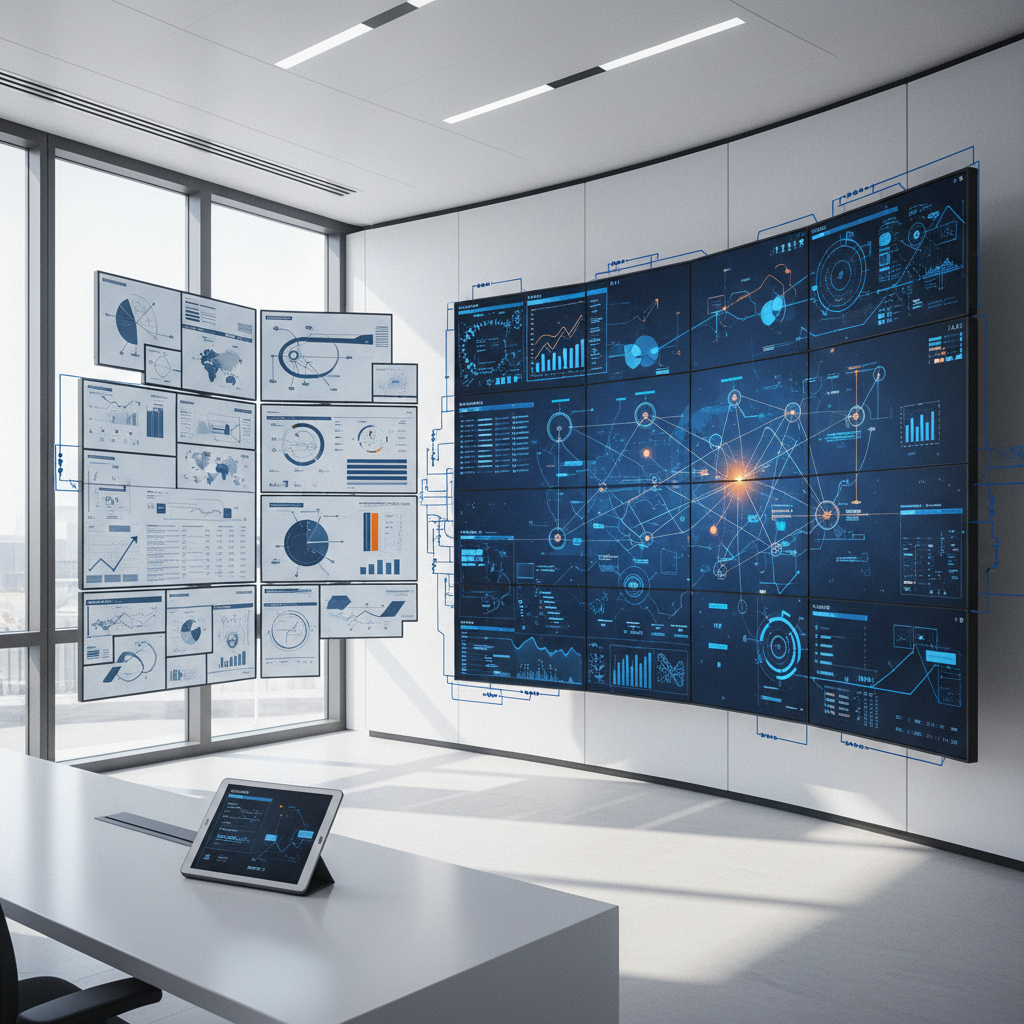
The answer to data silos in the solar industry is a unified solar platform. This integrates all critical business functions into a single system. From lead to commission, all data resides in one place. Everyone works from the same source of truth. This is the essence of solar data integration.
Imagine a platform where a sales proposal, design specifications, permitting documents, procurement orders, and installation schedules are all linked. Changes made in one module instantly update across the entire system. This eliminates redundant data entry and ensures accuracy speeding up your processes.
Key Components of an Integrated Approach:
Centralized Customer Relationship Management (CRM): A robust CRM for solar companies tracks every customer interaction. Lead management, sales pipeline, communication history, and project status are all accessible. This improves customer experience and sales efficiency.
Integrated Design and Engineering Tools: Your design software should communicate directly with your sales and operations. Automated system sizing, performance modeling, and bill of materials generation become seamless. Per-panel modeling ensures precise energy predictions.
Streamlined Operations and Project Management (ERP for Solar): An ERP for solar manages inventory, procurement, scheduling, and field service. It provides real-time visibility into project progress and resource allocation. This optimizes supply chain and installation workflows.
Automated Financial Management: Integration with accounting and financing systems ensures accurate invoicing, payment tracking, and financial reporting. It allows for transparent management of financing programs and incentives.
Performance Monitoring and Service: Post-installation data feeds back into the system. This enables proactive maintenance and performance validation. It closes the loop on customer satisfaction and system efficiency.
The Solentrex Difference: Hard Gates and Locked Numbers
A truly unified platform does more than just connect systems. It enforces data integrity. Solentrex uses "hard gates" to prevent flawed deals from progressing. This means if a design doesn't meet performance criteria, or if financial parameters are out of bounds, the system blocks it. It cannot move forward until corrected.
For example, if a sales rep submits a proposal with an incorrect system size or an unviable financial structure, the hard gate stops it. This prevents errors from reaching the customer. It eliminates costly change orders down the line. It ensures your reps propose viable projects from day one. This proactive approach saves time and money. It protects your brand reputation.
Numbers are locked in. Once a design is approved and a proposal generated, those core metrics are immutable within the system. This provides a single source of truth for energy production, savings, and financial terms. Everyone from sales to finance to installation operates from the same approved data set.
Your Benefits with a Unified Platform:
Reduced Soft Costs: Eliminate manual data entry and reconciliation errors. This cuts administrative overhead.
Faster Project Cycles: Streamlined workflows accelerate every stage, from design to installation. Close more deals in less time.
Improved Accuracy: Consistent data across all departments reduces errors and rework. This means fewer change orders.
Enhanced Decision Making: Real-time access to comprehensive data empowers better strategic and operational decisions. Understand your pipeline and performance.
Higher Customer Satisfaction: Faster, more accurate proposals and smoother installations lead to happier customers. This improves referrals.
Scalability: A unified system provides the infrastructure to grow your business without proportional increases in administrative burden.
Implementation Steps for Solar Data Integration
Adopting a unified platform requires a strategic approach. Here are the steps:
Assess Your Current State: Document all existing systems, workflows, and data points. Identify key pain points and areas of inefficiency. What data lives where?
Define Requirements: Determine what an ideal integrated system needs to achieve. Prioritize features based on business impact. What are your critical "must-haves"?
Vendor Evaluation: Research and select a platform designed specifically for the solar industry. Look for proven integration capabilities and robust features that address your unique needs.
Data Migration and Integration: Plan for careful migration of existing data. Ensure seamless integration with any necessary external tools that cannot be fully replaced.
Pilot Program: Implement the new system with a small team or for a specific project type first. Gather feedback and refine processes.
Company-Wide Rollout and Training: Roll out the system across all departments. Provide comprehensive training to ensure user adoption and proficiency.
Continuous Optimization: Regularly review system performance and user feedback. Make adjustments to maximize efficiency and leverage new features.
Common Mistakes to Avoid
Underestimating Training Needs: Users need comprehensive training to adopt new systems effectively. Do not assume familiarity.
Ignoring Data Quality: "Garbage in, garbage out." Ensure your data is clean before migration. Bad data contaminates new systems.
Lack of Stakeholder Buy-in: All department heads must support the transition. Without their commitment, adoption will falter.
Over-Customization: While flexibility is good, excessive customization can create maintenance headaches and limit future upgrades. Stick to core needs.
Failing to Define KPIs: Without clear metrics for success, it's impossible to measure the ROI of your integration efforts. What will you measure?
Conclusion
Breaking down data silos with a unified solar platform is not an option; it's a necessity for modern solar businesses. It transforms operational inefficiencies into competitive advantages. It simplifies complex workflows and ensures every project is built on solid data. With hard gates preventing errors and locked numbers ensuring consistency, you gain predictability and control.
Your business in can benefit significantly from this approach. Stop managing disparate systems. Start driving your business forward with intelligent solar data integration. Take control of your data, optimize your operations, and secure your margins.
Ready to transform your operations and eliminate data silos? Contact Solentrex today for a personalized demonstration of our unified solar platform.
Frequently asked questions
What are data silos in the solar industry?
Data silos occur when different departments within a solar company use separate, unintegrated software systems, leading to fragmented information, redundant data entry, and inconsistent data across the organization.
How does a unified solar platform solve the data silo problem?
A unified solar platform integrates all core business functions, CRM, design, operations, finance, into a single system. This centralizes data, ensures all teams work from the same information, and automates data flow, eliminating manual transfers and reducing errors.
What is a 'hard gate' in the context of solar operations?
A hard gate is a system feature that automatically blocks flawed deals or projects from advancing to the next stage if they do not meet predefined criteria (e.g., performance metrics, financial viability). This prevents costly errors and rework.
Can a unified platform help with financial risk mitigation?
Yes, by integrating financial data with sales and operations, a unified platform ensures accurate project estimates, real-time pricing, and consistent financial terms. This reduces unforeseen costs and helps protect project margins, a critical aspect of mitigating financial risks.
What are the benefits of integrating CRM and ERP for solar companies?
Integrating CRM and ERP for solar companies provides a complete view of the customer lifecycle and project financials. It enhances lead tracking, streamlines design-to-installation workflows, optimizes resource allocation, and ensures consistent data for sales, operations, and accounting.