
Blog · Industry
Revolutionizing Solar Operations: A Deep Dive into End-to-End Platform Solutions
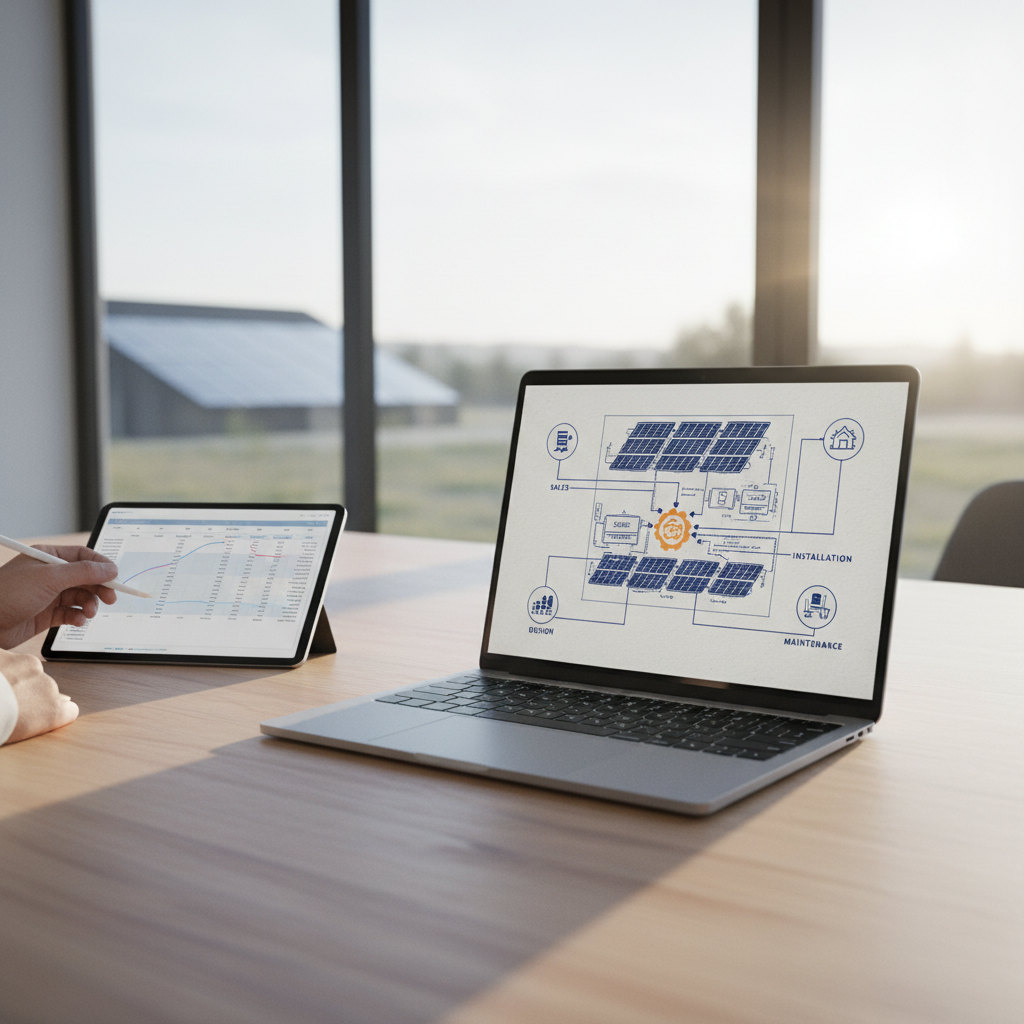
Solar energy demands efficiency. Your company requires tools that match this demand. Legacy systems create friction. Multiple platforms mean data silos, manual transfers, and wasted hours. This impacts your bottom line. It slows your pipeline.
An end-to-end platform solution changes this. It unifies your operations. From lead generation to final installation and beyond, every step lives in one system. This guide explores how a single platform transforms your solar business. It focuses on tangible benefits: faster sales cycles, reduced operational costs, and guaranteed customer savings. You run a lean, profitable business. This platform helps you maintain that.
Table of Contents
- The Core Challenge in Solar Operations
- What is an End-to-End Solar Platform Solution?
- Streamlining the Solar Project Lifecycle
- Lead Management and Qualification
- Accurate Design and Engineering
- Proposal Generation and Sales Closure
- Financing and Contract Management
- Procurement and Logistics
- Installation and Project Management
- Post-Installation Monitoring and Support
- Centralized Data Management: The Foundation of Efficiency
- Integrating Sales and Operations: A Unified Approach
- Boosting Profitability and Reducing Risk for EPCs
- Empowering Your Sales Team: Tools for Conversion
- Achieving Scalability with a Unified Platform
- Implementing an End-to-End Solar Platform
- The Future of Solar Operations
- Conclusion
The Core Challenge in Solar Operations
Solar operations are complex. They involve many moving parts. Leads come in from various channels. Designs require detailed engineering. Financial products need precise matching. Permits and installations demand coordination. Each stage has unique requirements. Traditionally, these stages operate in silos. Your sales team uses one CRM. Your design team uses CAD software. Your project managers use spreadsheets. Your finance partners use their own systems. This fragmented approach creates significant challenges.
Data duplication is common. Information gets lost. Manual data entry leads to errors. Communication breaks down between departments. Change orders become frequent. This directly impacts project timelines and profitability. Your reps spend time reconciling data, not selling. Your project managers chase information, not installing. This overhead costs money. It reduces your competitive edge. These inefficiencies prevent your business from scaling effectively. They lead to frustrated customers and missed opportunities.
What is an End-to-End Solar Platform Solution?
An end-to-end solar platform solution is a single, integrated software system. It manages every aspect of your solar business. From the initial customer contact to post-installation service, all data and workflows reside in one place. It eliminates the need for disparate tools. It automates repetitive tasks. It provides a single source of truth for all project information.
Think of it as your company's central nervous system. All departments connect to it. Sales, design, finance, procurement, and installation teams access the same, up-to-date information. This integration ensures consistency. It enforces process compliance. It prevents deals from moving forward with critical errors. This system acts as a hard gate. If a design is not viable, or a finance product is misapplied, the platform flags it. It stops the deal. This prevents costly rework later. It protects your profit margins.
Streamlining the Solar Project Lifecycle
An end-to-end platform revolutionizes the entire solar project lifecycle. It provides a structured workflow. Each step is clear. Data flows automatically from one stage to the next. This ensures accuracy and speed. From Lead to Installation: Mapping the Solar Project Lifecycle with Integrated Software offers a detailed look at this transformation. Here's how it works:
Lead Management and Qualification
Your sales pipeline starts with leads. An integrated platform captures these leads. It tracks their source. It assigns them to reps. Qualification becomes faster. The system provides tools for quick homeowner assessment. It can pre-qualify customers based on energy usage and credit. This ensures your sales team focuses on viable prospects. No more wasted time on unqualified leads. Your reps receive actionable intelligence. They know who to call and when.
Accurate Design and Engineering
Precision in design is non-negotiable. The platform integrates design tools. You generate accurate, site-specific system designs. These designs account for shade analysis, roof planes, and local regulations. The platform uses per-panel modeling. This ensures maximum energy production. It guarantees customer savings. This process takes about 3 minutes. Your team generates design iterations quickly. This speeds up proposal generation. It minimizes design errors. The platform's hard gate prevents designs with critical flaws from proceeding. This reduces change orders significantly.
Proposal Generation and Sales Closure
Your sales team needs fast, accurate proposals. The platform generates comprehensive proposals automatically. These include design details, energy offset projections, financial options, and clear savings estimates. Proposals are branded. They are consistent. They are error-free. This builds customer trust. It empowers your sales team. They can present options with confidence. Faster proposals lead to faster closes. This improves your conversion rates. Empowering Your Solar Sales Team: Tools for Faster Quotes and Higher Conversion dives deeper into these sales tools.
Financing and Contract Management
Financing is a critical part of the solar sale. The platform integrates with multiple financing partners. It allows your reps to present various loan, lease, or PPA options. The system automatically calculates payments and savings for each option. This ensures accuracy. It streamlines the application process. Contracts are generated, signed, and stored digitally. This simplifies compliance. It reduces paperwork. It creates a clear audit trail. The hard gate ensures financing terms match the project scope before a contract is finalized.
Procurement and Logistics
After a sale, equipment needs to be ordered. The platform manages your inventory. It automates procurement requests based on project needs. It tracks supplier orders. It provides real-time visibility into equipment status. This optimizes your supply chain. It reduces delays. It ensures materials are on-site when needed. No more last-minute scrambles for inverters or modules. This keeps your projects on schedule.
Installation and Project Management
Installation requires meticulous planning and execution. The platform provides project management tools. It assigns tasks. It tracks progress. It manages schedules and resources. Field teams access project details, designs, and checklists from mobile devices. This ensures consistency. It improves communication between the office and the field. Documentation is streamlined. Photos, sign-offs, and completion reports are captured digitally. This simplifies commissioning and reduces administrative burden. For EPCs, this means tighter control and reduced risk Why Solar EPCs Need Integrated Platforms: Boosting Profitability and Reducing Risk.
Post-Installation Monitoring and Support
Your relationship with the customer extends beyond installation. The platform integrates with monitoring systems. It tracks system performance. It alerts you and the customer to issues. This proactive approach improves customer satisfaction. It streamlines service calls. It provides data for ongoing performance analysis. This reinforces the value you deliver. It helps with warranty management and long-term customer support.
Centralized Data Management: The Foundation of Efficiency
At the heart of an end-to-end solution is centralized data management. All project information resides in a single database. This includes customer details, site assessments, design specifications, financial terms, and installation records. This eliminates data silos. It prevents inconsistencies. It ensures everyone works from the most current information. The Impact of Centralized Data Management on Solar Sales and Project Execution details how this transforms operations.
Your reps don't re-enter customer data. Your designers don't search for site photos. Your project managers don't reconcile conflicting spreadsheets. This saves hundreds of hours annually. It improves data integrity. It provides a holistic view of your entire business. This real-time access to accurate data empowers better decision-making. It identifies bottlenecks. It highlights opportunities for improvement. The hard gate functionality relies on this centralized data. It compares design outputs, financial inputs, and contract terms against a consistent data set. This ensures compliance and accuracy at every critical juncture.
Integrating Sales and Operations: A Unified Approach
The traditional separation between sales and operations creates friction. Sales teams close deals, then hand them off. Operations teams then find issues. These issues lead to change orders. They cause project delays. An integrated platform bridges this gap. Sales and operations work within the same system.
Sales understands operational constraints in real-time. Operations sees the details of every deal early. This fosters collaboration. It reduces miscommunication. The platform’s hard gate prevents sales from promising what operations cannot deliver. For example, a sales rep cannot configure a system that violates local setback requirements. The platform immediately flags this. This integration ensures that every sold project is viable and executable. It reduces expensive redesigns and rescheduling. This unified approach directly impacts your profitability and customer satisfaction.
Boosting Profitability and Reducing Risk for EPCs
EPCs face unique challenges. Managing subcontractors, complex logistics, and tight margins demands precision. An end-to-end solar project lifecycle management platform addresses these directly. It provides robust tools for project planning, resource allocation, and budget tracking. It automates compliance checks. It ensures all documentation is complete and accurate. This is crucial for managing risk.
The hard gate feature is particularly valuable for EPCs. It prevents designs with incorrect bill of materials from being ordered. It stops projects from moving to installation if permits are incomplete. This avoids costly delays and penalties. It minimizes rework. This directly boosts profitability. By providing a comprehensive overview of all projects, the platform allows EPCs to identify potential issues early. It allows them to allocate resources effectively. This maximizes operational efficiency. Why Solar EPCs Need Integrated Platforms: Boosting Profitability and Reducing Risk explores these benefits in depth.
Project Planning and Resource Allocation
Efficient project planning is key. The platform offers Gantt charts and critical path analysis. It assigns tasks and tracks dependencies. It allocates your crews and equipment effectively. This avoids overbooking. It minimizes downtime. You gain clear visibility into resource utilization across all active projects. This optimizes your workforce.
Budget Tracking and Cost Control
Maintaining budget is crucial. The platform tracks all project costs in real-time. It integrates with accounting systems. It compares actual expenses against planned budgets. This highlights cost overruns early. It allows for proactive adjustments. Your financial health benefits from this tight control. You manage your margins effectively.
Compliance and Documentation
Solar installations involve extensive regulations. The platform manages all required permits and inspections. It stores all compliance documents centrally. It automates submission reminders. This reduces administrative burden. It ensures you meet all legal and safety standards. This protects your reputation and avoids penalties. The platform ensures that all necessary paperwork is completed before any physical work begins, acting as a crucial hard gate for compliance.
Empowering Your Sales Team: Tools for Conversion
Your sales team is on the front lines. They need tools that help them sell more, faster. An end-to-end platform provides these tools. It offers quick design generation. It provides instant, accurate pricing. It presents clear financial comparisons. This empowers your reps. They can respond to customer questions immediately. They can close deals on the first visit.
The platform integrates CRM functionality. It tracks customer interactions. It manages follow-ups. It provides historical data for personalized engagement. This enhances the customer experience. It increases trust. With the ability to generate precise proposals that guarantee savings, your sales team has a powerful differentiator. The hard gate ensures proposals are always viable and accurate. This prevents uncomfortable callbacks later. Empowering Your Solar Sales Team: Tools for Faster Quotes and Higher Conversion details these sales enablement features.
Instant Quoting and Pricing
Speed matters in sales. The platform generates accurate quotes instantly. It factors in design, incentives, and financing. This allows your reps to present options on the spot. No more waiting for back-office calculations. This reduces customer hesitation.
Guaranteed Savings Calculations
Customers want to know their savings. The platform models energy production and consumption accurately. It provides clear, verifiable savings projections. This builds confidence. It quantifies the financial benefit of going solar. These guaranteed savings are a powerful selling point, backed by per-panel modeling and interval data integration.
Proposal Presentation and E-Signature
Professional proposals make an impact. The platform generates visually appealing, easy-to-understand proposals. It integrates e-signature capabilities. This streamlines the sales process. Customers can sign contracts digitally, accelerating deal closure. This reduces friction for both your team and your customer.
Achieving Scalability with a Unified Platform
Growth in the solar industry is constant. Your business needs to scale efficiently. Adding new markets, increasing project volume, or expanding your service offerings should not break your operations. A unified platform supports this growth. It provides consistent processes across all your locations and teams. It automates tasks, freeing up staff to focus on higher-value activities. Achieving Scalability in Solar: How a Unified Platform Supports Business Growth elaborates on this capability.
The platform's architecture is built for volume. It handles increasing data loads without performance degradation. Its standardized workflows ensure that new hires can become productive quickly. Training costs are reduced. The hard gate ensures that even at high volumes, critical errors are caught before they impact project execution. This maintains quality control as you expand. This means your business can grow without compromising operational integrity or profitability. It allows you to enter new markets with confidence.
Standardized Workflows Across Locations
Consistency is key for multi-branch operations. The platform enforces standardized workflows. Whether you operate in Goodyear, AZ, or across state lines, your processes remain uniform. This ensures quality control. It simplifies management. It allows for accurate performance benchmarking across your entire enterprise.
Automated Processes for Efficiency
Automation reduces manual effort. The platform automates data transfers, document generation, and task assignments. This frees up your valuable human resources. Your team can focus on complex problem-solving and customer interaction, rather than repetitive administrative tasks. This is a force multiplier for your operations.
Seamless Onboarding for New Hires
Rapid growth requires rapid onboarding. The intuitive interface and standardized processes of an end-to-end platform simplify training. New sales reps and project managers quickly learn the system. They become productive faster. This reduces the ramp-up time for new employees, supporting your expansion goals.
Implementing an End-to-End Solar Platform
Implementing a new system requires a structured approach. Start with a clear understanding of your current pain points. Define your desired outcomes. Engage your team in the selection process. Choose a platform that offers robust functionality, excellent support, and a proven track record. Data migration is a critical step. Ensure a smooth transfer of existing customer and project data. Provide comprehensive training for all users. Emphasize the benefits of the new system. Expect a transition period. Continuous improvement is key. Use the platform's analytics to refine your processes over time. The investment in an integrated platform pays dividends in efficiency and profitability.
The Future of Solar Operations
The solar industry continues its rapid evolution. Future success depends on adaptability and efficiency. End-to-end platform solutions will become the standard. They offer the necessary tools for complex energy management. Integration with smart home technologies, advanced battery storage, and dynamic pricing models will expand. Data analytics will provide even deeper insights into operational performance and customer behavior. The hard gate functionality will evolve to encompass even more compliance and performance parameters. Your business needs to be ready. A robust platform positions you for future growth. It ensures you remain competitive. It allows you to lead the market, not just react to it.
Conclusion
Your solar business thrives on efficiency. An end-to-end solar operations software solution delivers this efficiency. It unifies your entire solar project lifecycle management. It integrates sales and operations seamlessly. It provides centralized data management. This approach boosts profitability for EPCs, empowers sales teams, and facilitates scalable growth. The hard gate ensures every deal is viable, accurate, and profitable. Invest in a platform that transforms your operations. Drive your business forward with confidence. Your customers benefit from a smoother, faster, and more reliable solar experience. Your team gains the tools to excel. Your business achieves unparalleled operational efficiency. This is how you win in solar.
Ready to transform your solar business? Explore how a unified platform can streamline your operations, reduce costs, and accelerate growth. Contact us today for a demonstration tailored to your needs. Your next step to optimized solar operations starts here.
Frequently asked questions
What is an end-to-end solar platform solution?
An end-to-end solar platform solution is a single, integrated software system that manages every aspect of a solar business, including lead management, design, proposals, financing, procurement, installation, and post-installation support. It centralizes all data and workflows, eliminating the need for multiple disparate tools.
How does a 'hard gate' function in a solar platform?
A 'hard gate' is a critical feature within an end-to-end solar platform that blocks a flawed deal from advancing if it contains critical errors. For example, it prevents designs that are not viable, financing products that are misapplied, or proposals with compliance issues from moving forward. This prevents costly rework and protects profit margins.
What are the primary benefits of integrating sales and operations in a solar business?
Integrating sales and operations through a unified platform reduces friction, improves communication, and prevents issues like change orders and project delays. Sales teams gain real-time understanding of operational constraints, and operations teams see deal details early. This ensures every sold project is viable and executable, leading to increased profitability and customer satisfaction.
How does an end-to-end platform help EPCs reduce risk and boost profitability?
For EPCs, an integrated platform provides robust tools for project planning, resource allocation, budget tracking, and compliance checks. The hard gate feature prevents costly errors by stopping projects with incorrect bills of material or incomplete permits. This minimizes rework, avoids penalties, and provides a comprehensive overview of projects to identify issues early, thus maximizing operational efficiency and profitability.
Can an end-to-end solar platform support business scalability?
Yes, a unified platform is designed to support scalable growth. It provides consistent processes across all locations and teams, automates tasks to free up staff, and is architected to handle increasing data loads. Its standardized workflows simplify onboarding for new hires, and the hard gate ensures quality control is maintained even at high volumes, allowing businesses to expand without compromising integrity.