
Blog · Design
Optimizing Solar Design Proposals with AI-Powered Software
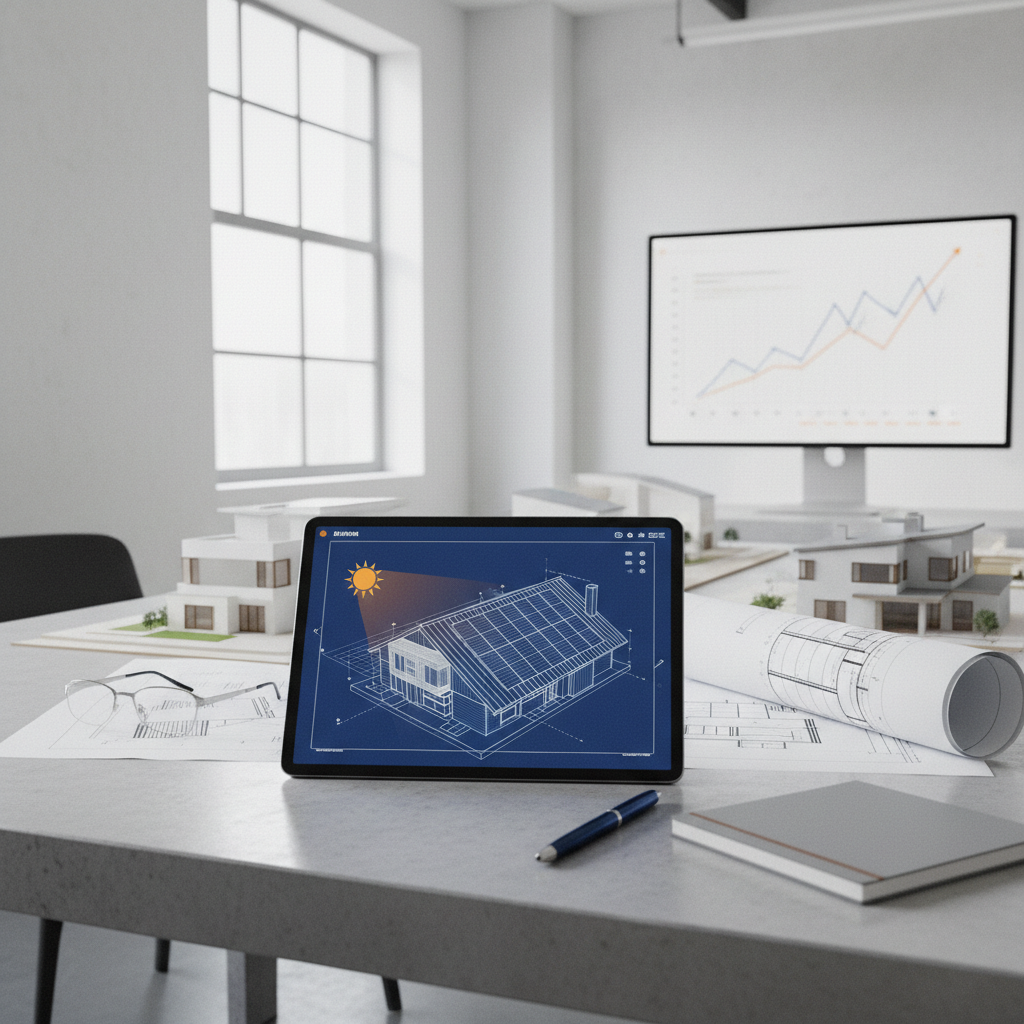
Your solar business thrives on precision and speed. Yet, manual design processes often introduce errors, eat up time, and force costly change orders. This erodes profit and frustrates your sales teams. In today's competitive market, slow and inaccurate proposals kill deals. They delay project timelines and reduce customer trust.
AI-powered solar design software changes this. It delivers accurate, optimized proposals faster. This reduces errors and shortens your sales cycle. Integrating AI tools into your workflow ensures every design is bankable and ready for installation. It improves your bottom line.
The Design Dilemma: Why Manual Processes Fail
Traditional solar design involves several manual steps. Site assessments, shading analysis, and equipment placement often rely on outdated tools or best guesses. These methods are prone to human error. They also consume valuable time. Each mistake can lead to a redesign, delaying your project and increasing costs. This directly impacts your revenue.
Consider the impact of a single miscalculation. An incorrectly sized inverter or a poorly placed panel string leads to underperformance. This means unhappy customers and potential callbacks. Manual processes also struggle with complex rooflines or specific local regulations. They require multiple iterations to get right. This overhead slows your pipeline.
Your sales reps need proposals quickly. Delays in design mean lost opportunities. Customers do not wait. They go to competitors who can deliver faster. This is why design efficiency is critical for your sales success.
AI Solar Design: Precision and Speed in Every Proposal
AI solar design software transforms this process. It automates complex calculations and simulations. This ensures high accuracy from the first draft. These tools leverage satellite imagery, LIDAR data, and advanced algorithms. They create precise digital twins of properties eliminating the need for repeated site visits in many cases.
Instant Site Analysis and Shading Modeling
AI tools perform instant shading analysis. They use high-resolution aerial imagery to map obstructions. Trees, chimneys, and other roof features are identified automatically. The software then simulates shade patterns hour by hour, day by day. This determines the optimal panel placement for maximum energy production. Manual methods cannot match this level of detail or speed.
Per-panel modeling ensures every module contributes optimally. This level of detail builds confidence in your energy production estimates and reduces the risk of performance gaps post-installation.
Automated Layout and Optimization
Once shading is analyzed, AI algorithms propose optimal system layouts. They consider panel types, inverter specifications, and electrical stringing. The software identifies the best configuration for energy output. It respects setbacks and local codes. This automation means your designers spend less time on repetitive tasks. They focus more on complex challenges or custom solutions.
Your team can generate multiple design options in minutes. Each option comes with detailed performance projections. This allows for quick comparisons and client-specific adjustments. The speed and accuracy mean your sales team gets viable proposals faster.
Integrating Electrical Design and Bill of Materials
AI-powered solar design goes beyond panel placement. It integrates electrical design. This includes wiring diagrams, conduit runs, and component sizing. The software automatically generates a complete bill of materials (BOM). This includes every component needed for the installation. This integrated approach minimizes errors between design and procurement. It ensures all necessary parts are ordered correctly the first time.
This streamlines your workflow. It also reduces costs associated with incorrect orders or last-minute changes.
The Hard Gate: Ensuring Bankable Designs
One of the most critical features of advanced solar design software is the "hard gate." This mechanism prevents a flawed design from ever leaving the system. If a design violates critical parameters – such as minimum energy output, specific code requirements, or financial thresholds – the system blocks it. It requires correction before moving forward.
This hard gate eliminates the risk of proposing unbuildable or unprofitable systems. It ensures every proposal your sales team presents is financially viable and technically sound. This reduces costly change orders down the line. It protects your profit margins and also streamlines your entire operational pipeline. This is a significant improvement over legacy tools that allow bad designs to pass through undetected.
Boosting Sales and Reducing Change Orders
Accurate solar proposals translate directly into higher sales conversions. When customers see a detailed, data-backed design, their confidence increases. The ability to quickly generate multiple options and show clear savings projections empowers your sales team. They can answer questions precisely and close deals faster. Enhancing Solar Sales Efficiency: Best Practices for Sales Teams
AI solar design software significantly reduces change orders. By catching errors in the design phase, you avoid costly rework during installation. This saves material costs, labor hours, and prevents delays. For an in-depth look at this benefit, refer to our article on How to Reduce Change Orders in Solar Projects with Integrated Platforms.
Your team can generate a complete proposal – from initial design to financial modeling – in about 3 minutes. Compare that to hours or days with traditional methods. This speed is a competitive advantage.
Choosing the Right AI Solar Design Software
Selecting the best AI solar design software requires careful consideration. Look for platforms that offer:
High-resolution mapping: Ensure precise site analysis.
Automated shading and obstruction detection: Critical for accurate energy production estimates.
Integrated financial modeling: Connects design to customer savings.
Compliance checks: Automatic verification against local codes.
Bill of Materials (BOM) generation: For accurate procurement.
Hard gate functionality: To prevent flawed designs from progressing.
User-friendly interface: For quick adoption by your design and sales teams.
Invest in a solution that offers comprehensive support and training. A smooth transition minimizes disruption to your operations.
Streamlining Your Solar Workflow
Integrating AI solar design software into your existing workflow is a strategic move. It begins with data. High-quality satellite imagery and property data feed the AI algorithms. Your team then uses the software to generate initial designs. These designs are then reviewed and refined. Financial proposals are automatically generated, ready for presentation. This entire process is quicker and more accurate than ever before. The Ultimate Guide to Solar Sales Software: Revolutionizing Design, Financing & E-signing
This streamlined approach reduces your operational costs. It increases your sales efficiency. It also guarantees customer savings, building long-term trust. For more details on simplifying the financing aspect, check out Simplifying Solar Financing: A Comprehensive Guide for Sales Professionals. Your reps will appreciate the speed.
Conclusion: The Future of Solar Design is AI-Powered
The solar industry demands efficiency and accuracy. AI-powered solar design software provides both. It transforms a complex, error-prone process into a rapid, precise workflow. From instant site analysis to optimized panel layouts, AI ensures every proposal is robust. It ensures every deal is bankable.
Embrace this technology to outpace your competitors. Reduce change orders. Accelerate your sales cycle. Deliver superior customer experiences. It is an investment that pays for itself through increased profits and streamlined operations. Your sales pipeline will thank you.
Ready to see how AI can transform your solar design process? Contact us today for a demonstration of Solentrex's capabilities. We will show you how to generate optimized proposals in minutes, not hours.
Frequently asked questions
What is AI-powered solar design software?
AI-powered solar design software uses artificial intelligence and machine learning algorithms to automate and optimize the creation of solar energy system designs and proposals. It analyzes data like satellite imagery and shading to generate efficient, accurate layouts and performance estimates.
How does AI solar design improve accuracy?
AI improves accuracy by performing precise shading analysis using high-resolution data, automating panel placement to maximize energy yield, and integrating electrical design, all while adhering to local codes and system parameters. This reduces human error common in manual processes.
What is a 'hard gate' in solar design software?
A hard gate is a critical feature that prevents flawed or non-compliant designs from progressing. If a proposal fails to meet predefined technical, regulatory, or financial criteria, the hard gate blocks it, ensuring only viable designs reach the customer or installation phase.
How does this technology reduce change orders?
By identifying and correcting design flaws early, before a proposal is finalized or construction begins, AI solar design software significantly reduces the need for costly adjustments or change orders during installation. This saves time, money, and improves project efficiency.
Can AI solar design software speed up the sales process?
Yes, AI solar design software drastically speeds up the sales process by enabling sales teams to generate detailed, accurate proposals in minutes, rather than hours or days. This quick turnaround allows reps to present options faster and close deals more efficiently.