
Blog · Solar Sales
From Lead to Install: How Solar Sales Platforms Streamline the EPC Workflow
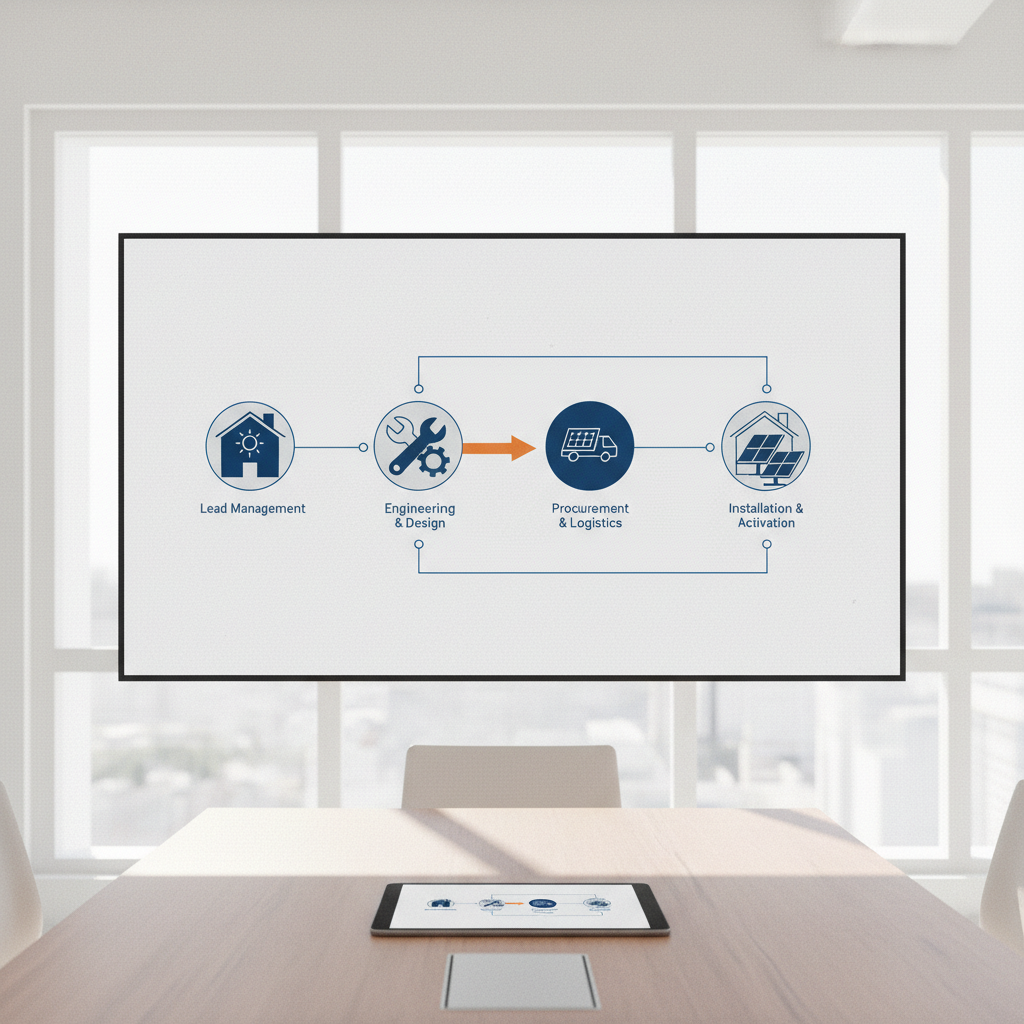
Solar EPCs face a constant challenge. They manage complex projects. Disconnected systems and manual handoffs create bottlenecks. These issues impact everything from initial lead capture to final installation. The result is lost time, increased costs, and frustrated customers. This article details how solar sales platforms create a unified workflow. They bring visibility and automation to every stage of the solar project lifecycle. This approach ensures efficiency and profitability for your operations.
The Disconnected Challenges of Traditional Solar EPC Workflows
Many solar EPCs operate with a patchwork of tools. CRM for leads, CAD for design, spreadsheets for pricing, and separate project management software for installation. Each system works in isolation. This creates data silos. Information gets lost or duplicated. Errors are common. This fragmented environment slows your entire operation.
Impact on Lead Management
Without an integrated platform, managing solar leads is difficult. Sales teams capture information in one system. Design teams need that data. They often re-enter it. This creates delays. It also introduces potential for mistakes. Sales can't track design progress easily. Finance partners struggle to get accurate proposal data. This impacts your sales velocity.
Design and Proposal Inefficiencies
Traditional design processes are time-consuming. Manual calculations and CAD work take hours. Integrating accurate financial models into proposals is another hurdle. Discrepancies between the proposed design and installation realities lead to change orders. These issues delay project approval and increase soft costs.
Installation and Project Management Hurdles
Installation teams often work from outdated plans. Communication breakdowns between sales, design, and field crews are common. Tracking project status across various systems is complex. This makes it hard to manage resources, schedules, and materials effectively. It also hinders accurate inventory management and procurement Inventory Management and Procurement in Solar: Leveraging Technology for Cost Savings.
Unifying the Solar Project Lifecycle with an Integrated Platform
Modern solar sales platforms offer a single source of truth. They integrate lead management, design, proposal generation, and project tracking. This unification streamlines the entire EPC workflow. Your teams operate with consistent data. From the first customer contact to the final installed system, everything is connected.
Step 1: Automated Lead Capture and Qualification
An integrated platform starts with robust lead management. It captures leads from various sources: web forms, referrals, and direct outreach. The system automatically qualifies these leads. This ensures your sales reps focus on high-potential prospects. Key homeowner data, such as utility information and energy consumption, is pulled directly into the platform. This eliminates manual data entry. Your sales reps gain immediate access to critical project details.
Actionable Advice: Configure your lead scoring rules within the platform. Prioritize leads based on energy usage, credit scores, and property characteristics. This directs your sales team to the most promising opportunities.
Step 2: Streamlined Design and Accurate Proposal Generation
Once a lead is qualified, the platform moves to design. It uses your pre-set system constraints and pricing. It auto-generates design proposals. This takes about 3 minutes. The designs include per-panel modeling. They account for shading and roof pitch. Detailed financial models are immediately available. This includes monthly savings, payback periods, and production estimates. The platform ensures consistency across all proposals. It locks pricing and specifications. This prevents manual errors and reduces change orders.
This level of automation means your sales teams deliver accurate proposals quickly. They don't need to wait for a separate design team. The platform acts as a hard gate. It blocks a flawed deal from advancing. This prevents costly errors before they happen. Choosing the Right Solar Proposal Software for Accurate Costing and Faster Approvals details how this feature is critical for accurate costing.
Step 3: Integrated Financing and Sales Conversion
Proposals seamlessly integrate with financing options. The platform allows for real-time adjustments to financing terms. This ensures customers see accurate monthly payments and savings. Sales reps can present multiple scenarios on the spot. This speeds up the sales cycle. Electronic signatures and digital document management are built-in. This enables quick approvals and contract finalization. Your reps close deals faster with fewer administrative steps.
Step 4: Efficient Project Handoff and Installation Management
After a sale, the platform manages the project handoff. All project details, designs, and contracts transfer automatically to the operations team. Installation teams access real-time project plans and schedules. Mobile applications provide critical information in the field. This includes installation guides and site photos. Boosting Field Team Efficiency: Mobile Apps for Solar Installers and Project Tracking explores the benefits of these tools. Project managers track progress, material needs, and crew assignments. This minimizes communication gaps and ensures installations stay on schedule. The platform also helps manage compliance and permitting requirements Compliance and Permitting Automation for Solar Installers: Reducing Red Tape and Delays. This reduces red tape and delays.
Common Mistake to Avoid: Resist the urge to use external communication channels (e.g., text messages, personal emails) for project updates. Keep all communication within the platform for a clear audit trail and to ensure everyone has the latest information.
Step 5: Post-Installation Monitoring and Customer Support
The solar project lifecycle does not end with installation. Integrated platforms often include monitoring capabilities. They track system performance. This ensures the system delivers promised savings. Customer support teams access historical project data. This helps them resolve issues quickly. This continuous engagement builds customer loyalty and provides valuable feedback for future projects. Regular performance checks ensure your systems in Goodyear, AZ, perform optimally, maximizing customer satisfaction.
The Tangible Benefits for Your EPC Business
Integrating solar sales and operations through a unified platform yields significant benefits:
- Reduced Operational Costs: Automation minimizes manual data entry and administrative tasks. This saves staff time. It reduces errors. These efficiencies cut direct operational expenses.
- Increased Sales Efficiency: Faster proposal generation and streamlined financing processes accelerate sales cycles. Sales teams close more deals in less time. Your sales reps spend more time selling.
- Improved Accuracy and Reduced Change Orders: Hard gates prevent flawed deals. Automated design tools ensure accuracy. This leads to fewer post-sale adjustments and customer complaints.
- Enhanced Customer Satisfaction: A smooth process from lead to install creates a better customer experience. Timely communication and accurate expectations lead to happier customers.
- Better Data and Analytics: A single platform provides comprehensive data. You gain insights into every stage of your pipeline. This informs better business decisions. You can optimize processes based on real numbers. This delivers on the promise of Comprehensive Guide to Solar Sales Software for EPCs & Installers: Boosting Project Efficiency and Profitability by truly integrating sales and operations.
Conclusion: Your Path to a More Efficient Solar Operation
The future of solar EPC operations is integrated and automated. Disconnected systems are no longer viable. A comprehensive solar sales platform unifies your workflow from lead generation through installation and beyond. This approach reduces costs, boosts sales efficiency, and guarantees customer satisfaction. Embrace a platform that provides a hard gate to secure accurate deals. Automate your solar project lifecycle. Transform your operations. Unlock your full potential.
Ready to streamline your solar EPC workflow and boost your bottom line? Explore how a comprehensive solar sales platform can transform your operations today.
Frequently asked questions
What is a solar sales platform?
A solar sales platform is a software solution that unifies various aspects of an EPC's operations, including lead management, system design, proposal generation, financing integration, and project management, into a single, cohesive system.
How does a solar sales platform automate lead management?
It captures leads from multiple sources, automates qualification based on predefined rules, and pulls in essential homeowner and utility data, enabling sales reps to focus on high-potential prospects without manual data entry.
What is a 'hard gate' and why is it important?
A 'hard gate' is a feature within the platform that prevents flawed or non-compliant deals from progressing. It ensures that proposals are accurate, viable, and meet set criteria before they can be signed, preventing costly errors and change orders later in the project lifecycle.
How does a unified platform improve installation efficiency?
It ensures seamless handoff of project details from sales to operations, provides installation teams with real-time plans via mobile apps, and tracks project progress, materials, and schedules, minimizing communication gaps and keeping projects on track.
What are the main benefits of integrating solar sales and operations?
Key benefits include reduced operational costs through automation, increased sales efficiency due to faster proposals and financing, improved accuracy with fewer change orders, enhanced customer satisfaction, and better data for informed business decisions.