
Blog · Design
Automated Validation for Solar Designs: Catching Errors Before They Escalate
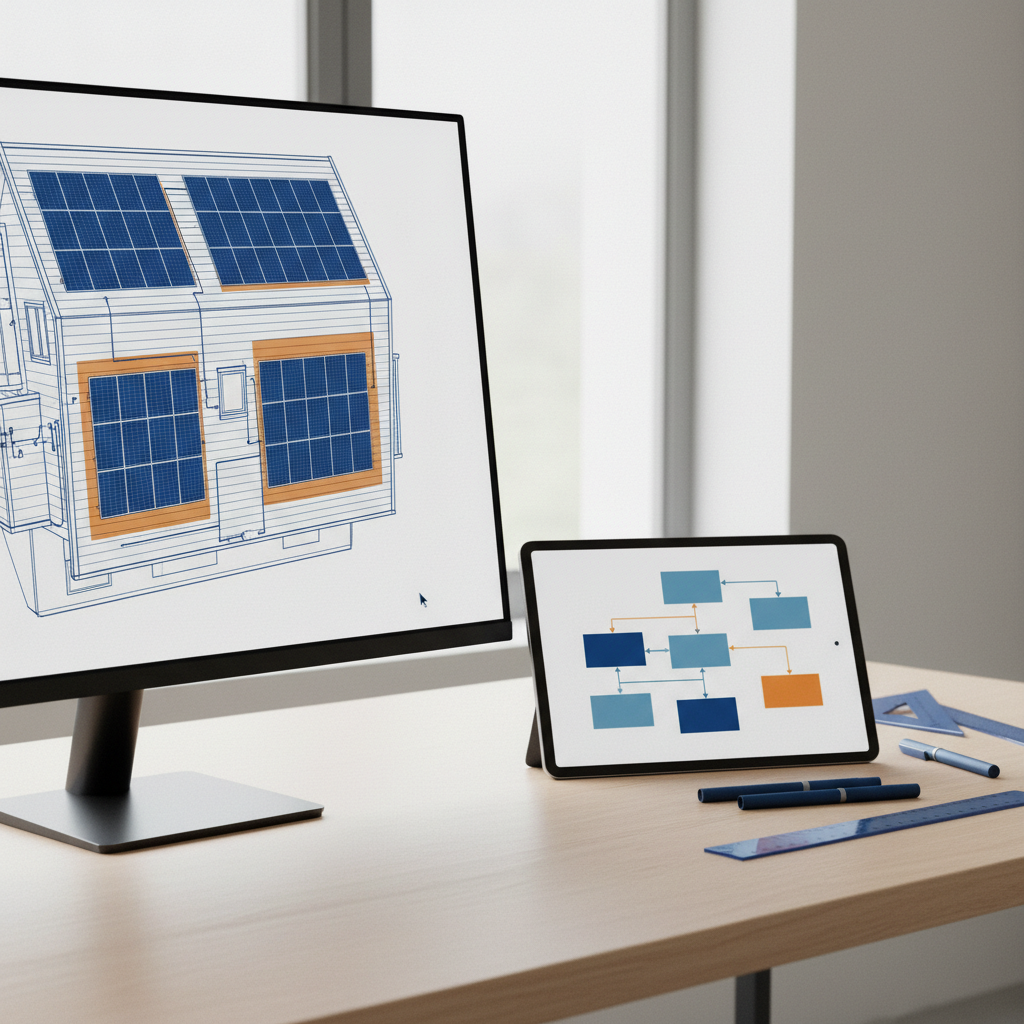
Manual review of solar designs introduces risk. Human error allows flaws to pass into proposals. These undetected issues cause change orders, project delays, and financial losses. Your team needs a way to stop these errors at the source. Automated validation is that solution by checking every detail of a solar design before it can advance.
Automated validation tools within solar design platforms ensure accuracy. They perform pre-flight checks on every aspect of a PV system design. This prevents flawed deals from reaching your customers or your installers. The result: reduced change orders, improved profitability, and stronger customer trust.
The Problem with Manual Solar Design Review
Traditional solar design workflows rely heavily on manual checks. After a designer completes a layout, another team member reviews it. This process is slow and is prone to error. Even experienced reviewers miss details. Small oversights in a solar design can lead to significant problems down the line.
- Inaccurate Energy Production Estimates: A misplacement of a panel or an incorrect tilt can skew energy modeling. This leads to proposals that promise more than the system can deliver. Customers then experience underperformance.
- Code Compliance Issues: Local requirements are complex. Manual checks often miss specific setback rules, fire pathways, or structural clearances. This results in failed inspections and costly rework.
- Interconnection Delays: Utility requirements vary. Incorrect single-line diagrams or missing components stop projects. These delays extend timelines and frustrate customers.
- Increased Change Orders: Flawed designs discovered during installation force changes. Each change order adds cost and time. Your crews stop work, materials are reordered, and schedules shift. The True Cost of Solar Change Orders: Impact on Profitability and Reputation details how these costs erode your margins.
These issues impact your bottom line directly, hurt your reputation, slow your pipeline, and your finance partners see the risk resulting in your sales team loses confidence.
The Solution: Automated Solar Design Validation
Automated solar design validation solves these problems. It integrates checks directly into your design platform. The system performs hundreds of pre-flight solar design checks instantly. This ensures design integrity before a proposal ever leaves your desk. It acts as a hard gate, blocking flawed designs from moving forward.
How Automated Validation Works in 3 Steps
Automated validation streamlines your workflow. Here is how it works:
Design Creation and Real-time Feedback: Your designer places panels and components. The platform provides real-time feedback and highlights potential issues as they arise. This immediate feedback helps designers correct errors on the spot. It eliminates guesswork and means fewer revisions later.
Comprehensive Pre-Flight Checks: Once the design is complete, the system runs a full set of automated PV system design checks. These checks cover every aspect: panel count, inverter sizing, wire runs, shade analysis, and code compliance. The system ensures the design meets all project parameters. It verifies adherence to your company’s standards and validates utility requirements.
The Hard Gate: If the design contains any critical errors, the platform blocks its progression. This is the hard gate. It stops flawed designs from reaching sales or installation. The designer must correct the identified errors before the design can move forward. This ensures only accurate, compliant designs ever leave the design team.
This process is fast. It takes about 3 minutes or less for the system to complete its validation. The speed allows your team to iterate quickly keeping your pipeline moving. This strategy is critical to Blocking Flawed Solar Deals: A Comprehensive Strategy for Reducing Change Orders and Boosting Profitability.
Key Benefits of Automated Error Detection in Solar Design
Integrating automated validation into your workflow delivers concrete benefits. These benefits affect every part of your operation.
Guaranteed Design Accuracy and Compliance
Automated checks eliminate human error. Every design passing through the same rigorous process consistently guarantees accuracy. It ensures compliance with local codes and utility requirements. This eliminates surprises during inspection and reduces the need for change orders.
Reduced Operational Costs
Fewer change orders mean lower costs. Your crews spend less time on rework and avoid additional material runs. Your project managers allocate resources more efficiently creating savings that directly impact your profitability. Automated processes also reduce the labor involved in manual review.
Faster Sales Cycle and Improved Customer Experience
Accurate proposals are generated quickly. This speeds up your sales cycle and customers receive reliable information from the start. They avoid the frustration of delays and building trust from the get go. Confident customers are more likely to sign and are more likely to recommend your services.
Enhanced Profitability and Predictability
Preventing errors before they escalate protects your margins. Your projects stay on budget, timelines remain on track and this predictability allows for better financial forecasting. It strengthens your relationships with financing partners allowing you to deliver on your promises making your business more profitable.
Implementing Quality Assurance in Solar Design
Adopting automated validation requires integrating new tools. It also involves establishing clear workflows. Your quality assurance solar processes become proactive, not reactive.
Choosing the Right Platform
Select a solar design platform with robust automated validation capabilities. The platform should offer:
- Comprehensive Rule Sets: It must check for all relevant codes, utility requirements, and your internal standards.
- Configurable Validation Parameters: You should be able to customize rules based on your service area.
- Detailed Error Reporting: The system must clearly identify issues and suggest solutions.
- Integration with Other Tools: It should work with your CRM, financing portals, and proposal generators.
Training Your Team
Train your design and sales teams on the new validation process. They need to understand how the hard gate works and how to interpret error messages. Empower your sales teams by showing them the accurate designs they will present. This training reinforces confidence and improves overall efficiency. Empowering Sales Teams: Tools and Training to Avoid Bad Solar Deals offers guidance on this critical step.
Continuous Improvement
Automated validation is not a one-time setup. Regularly review your validation rules and update them as codes change or new utility requirements emerge. Analyze common errors flagged by the system and use this data to refine your design processes. This continuous feedback loop strengthens your quality assurance solar strategy.
Common Mistakes to Avoid
Even with automated tools, mistakes can happen if the system is not used correctly.
- Ignoring Validation Outputs: Do not bypass or ignore the hard gate. Every flagged error requires attention. Bypassing validation negates its purpose.
- Outdated Rule Sets: Ensure your platform’s validation rules are current. Obsolete rules miss new requirements. This reintroduces risk.
- Lack of Integration: Do not use validation in a silo. Integrate it with your entire workflow to create a cohesive, error-proof process.
Automated validation for solar designs moves your business forward. It hardens your deal pipeline and stops problems before they start. You prevent costly change orders, build customer trust, and drive profitability. Your team focuses on growth, not rework.
Ready to eliminate design flaws and boost your project success? Explore Solentrex's solar design platform with automated validation capabilities.
Frequently asked questions
What is automated solar design validation?
Automated solar design validation is a process where software automatically checks a solar system design for errors, compliance issues, and adherence to project parameters before it can be used for proposals or installation. It acts as a hard gate, preventing flawed designs from progressing.
How does automated validation prevent change orders?
By catching errors in design early, such as incorrect panel placement, sizing issues, or code violations, automated validation ensures that only accurate and compliant designs move forward. This proactive error detection eliminates the root causes of many change orders during installation.
What types of errors can automated validation detect?
Automated validation can detect a wide range of errors, including inaccurate energy production estimates due to misplacement, code compliance issues (setbacks, fire paths), incorrect inverter sizing, missing components in single-line diagrams, and structural load concerns.
How does automated validation benefit sales teams?
Automated validation provides sales teams with accurate and reliable proposals. This reduces the risk of customer dissatisfaction from underperforming systems or project delays. Sales reps can present solutions with confidence, leading to faster deal closures and improved customer trust.
Is automated validation difficult to implement?
Implementing automated validation involves choosing a platform with robust capabilities and training your team. The platform handles the complex checks automatically, making the process streamlined once integrated into your workflow. Continuous review of validation rules ensures ongoing effectiveness.